Further information can be found on Aiym Zhanbolatkyzy’s Instagram: @aiymoonchild.
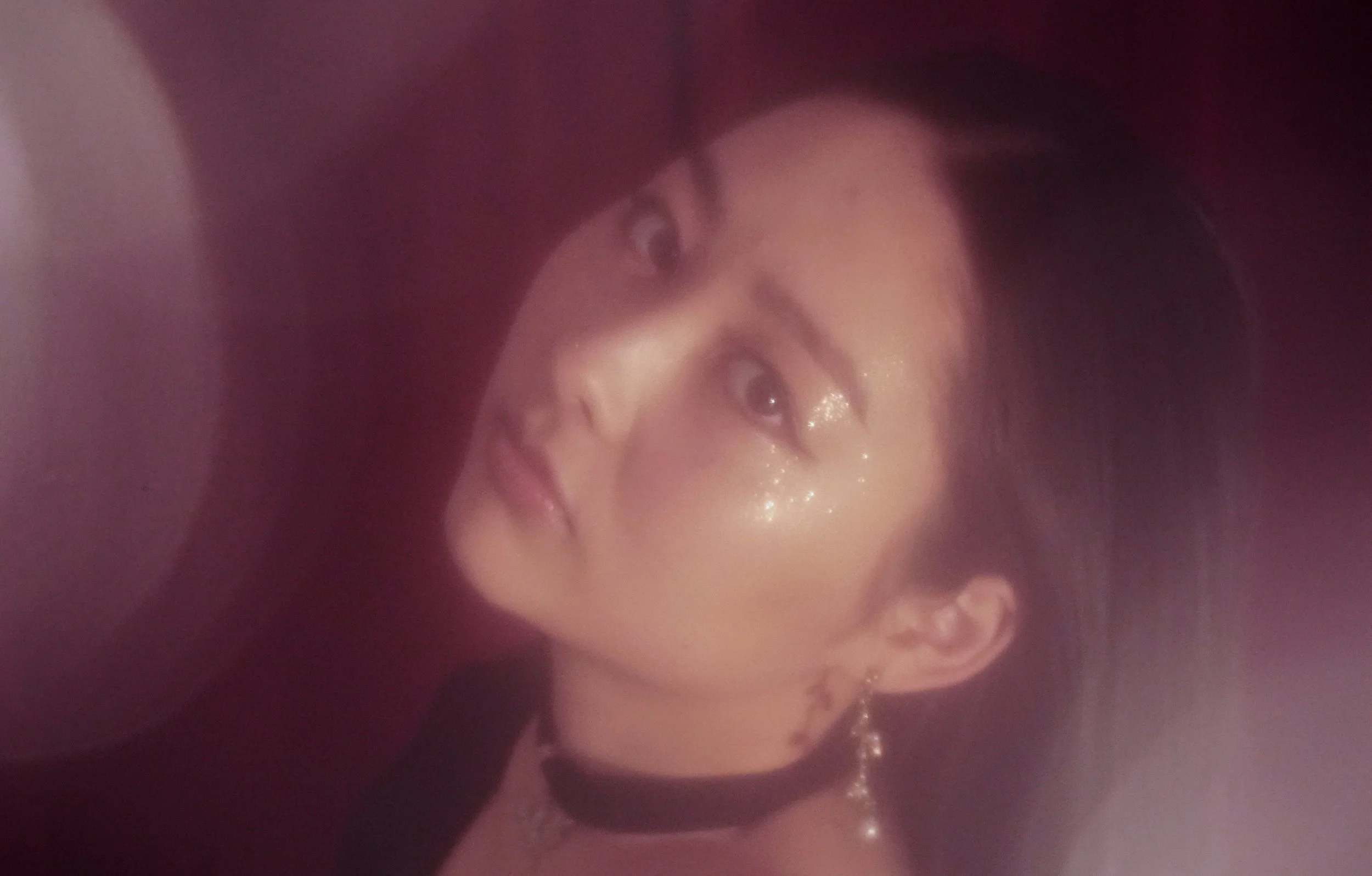
Aiym Zhanbolatkyzy. Photo courtesy of Zhanbolatkyzy.
Aiym Zhanbolatkyzy specialises in the techniques of the old masters and brings their famous talents from the past to present day. Inspired by the extravagance and detail of the Rococo style, Zhanbolatkyzy, an artist from Kazakhstan, reminds us why the methods of the old masters are so revered today.
What was your first introduction to art?
Like Sylvia Plath, ever since childhood I’ve wanted to be able to do everything and be everything. Drawing was simply the most accessible of all forms of creative expression. I started by drawing characters from my favourite cartoons. Gradually, it became a habit and, almost without me noticing or ever consciously planning it, became my main occupation.
What is your background? Did you have a lot of involvement with art throughout your life?
In my case, the urge to create is more like something I was born with, because I wasn’t surrounded by creativity at all growing up.
What memory from your childhood do you think played a significant role in your development in the arts?
I loved reading fairy tales, and those ingenious illustrations in books were what captivated and enchanted me forever. I was always guided by the desire to create something just as magical and extraordinary
Your Instagram bio says that you are inspired by the old masters. What time period and which artists are you referring to specifically?
The subjects of my inspiration are constantly changing and evolving. When I first started my Instagram account and wrote that in my bio, I was very fond of academic painting techniques and the themes of Romanticism and Rococo. That perfect style and manner of painting have, for the time being, run their course for me.
From what I’ve observed, artists with a more sophisticated and saturated visual sensibility eventually tend to find more pleasure in solid, concise forms than in perfectly realistic styles.
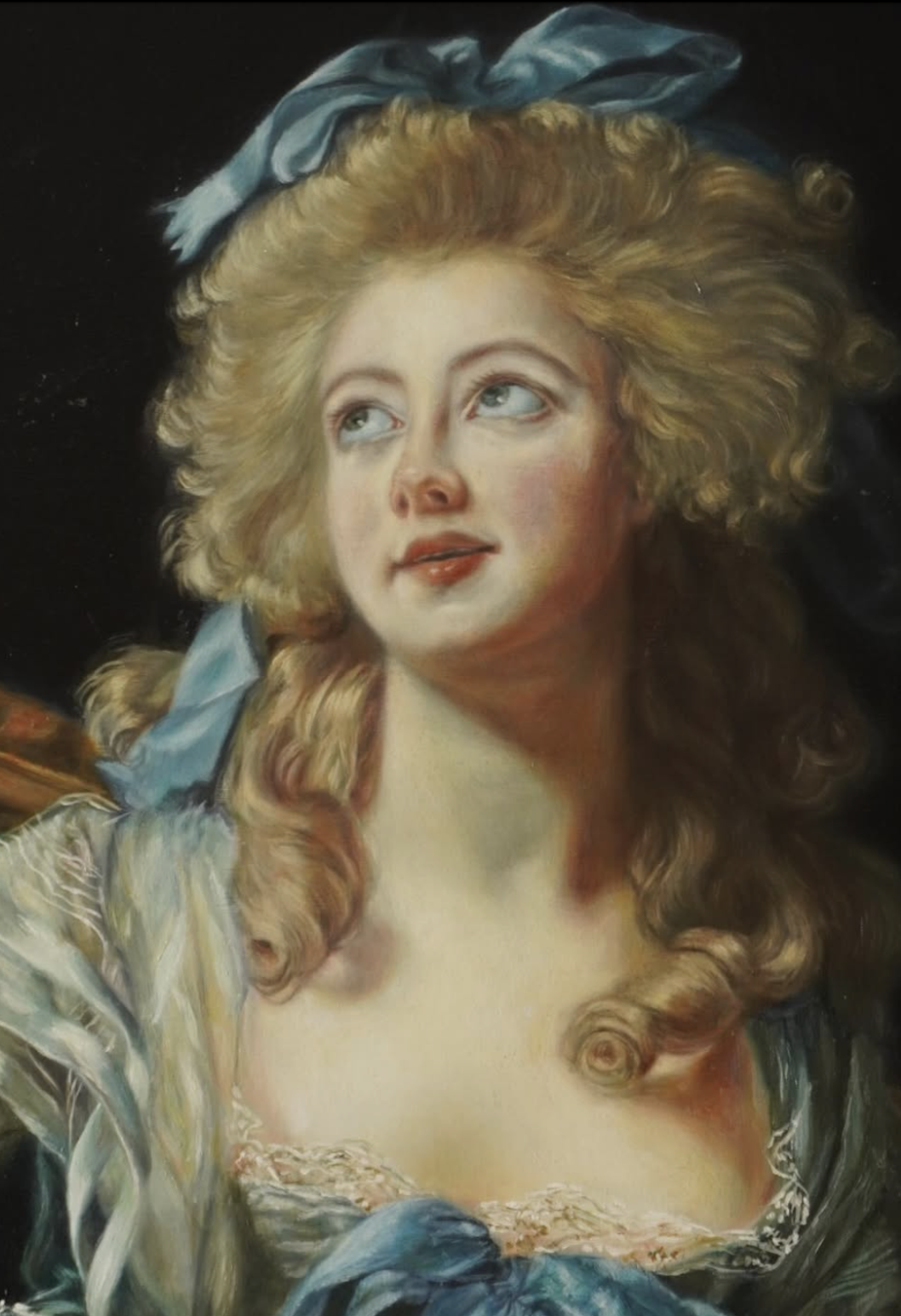
Mastercopy of “Madame Grand” Elizabeth L., 2026. Zhanbolatkyzy. Photo courtesy of Zhanbolatkyzy.
You explained in your story highlights about characteristics of old masters that one of the reasons people still love their work is because oftentimes they imitate nature in the pattern of a fabric, the texture of a dress, the colours of a painting, or the layout of the painting. Did you learn this in an academic setting, or was this something you noticed in your own personal practice?
Someone who helped me immensely in mastering the techniques of the old masters often pointed out that they studied and borrowed from nature as the perfect manifestation of beauty.
You also explained how these old masters were able to create the appearance of bold colours by skillfully creating mini sorts of ‘optical illusions’-using greys and muted colours to enhance lighter colours until they seemed bold. Are there other sorts of optical illusions or little tricks of the mind or tricks of the eye that you see in old masters that people may not know about?
There’s something I’ve noticed about painters whose work, at first glance, appears to be created with very thick layers of paint, in a seemingly broad, loose, and juicy manner, such as Rembrandt, Repin, the Impressionists, and others.
It only seems as though their process was so free, bold, and chaotic. As professionals, they avoided unnecessary movements and excessive layers of paint. Every thick brushstroke is calculated to contribute to the overall harmony of the painting, whereas randomly slapping oil paint onto a surface with a palette knife will hardly result in a high-quality work of art.
They also worked very slowly and thoughtfully.
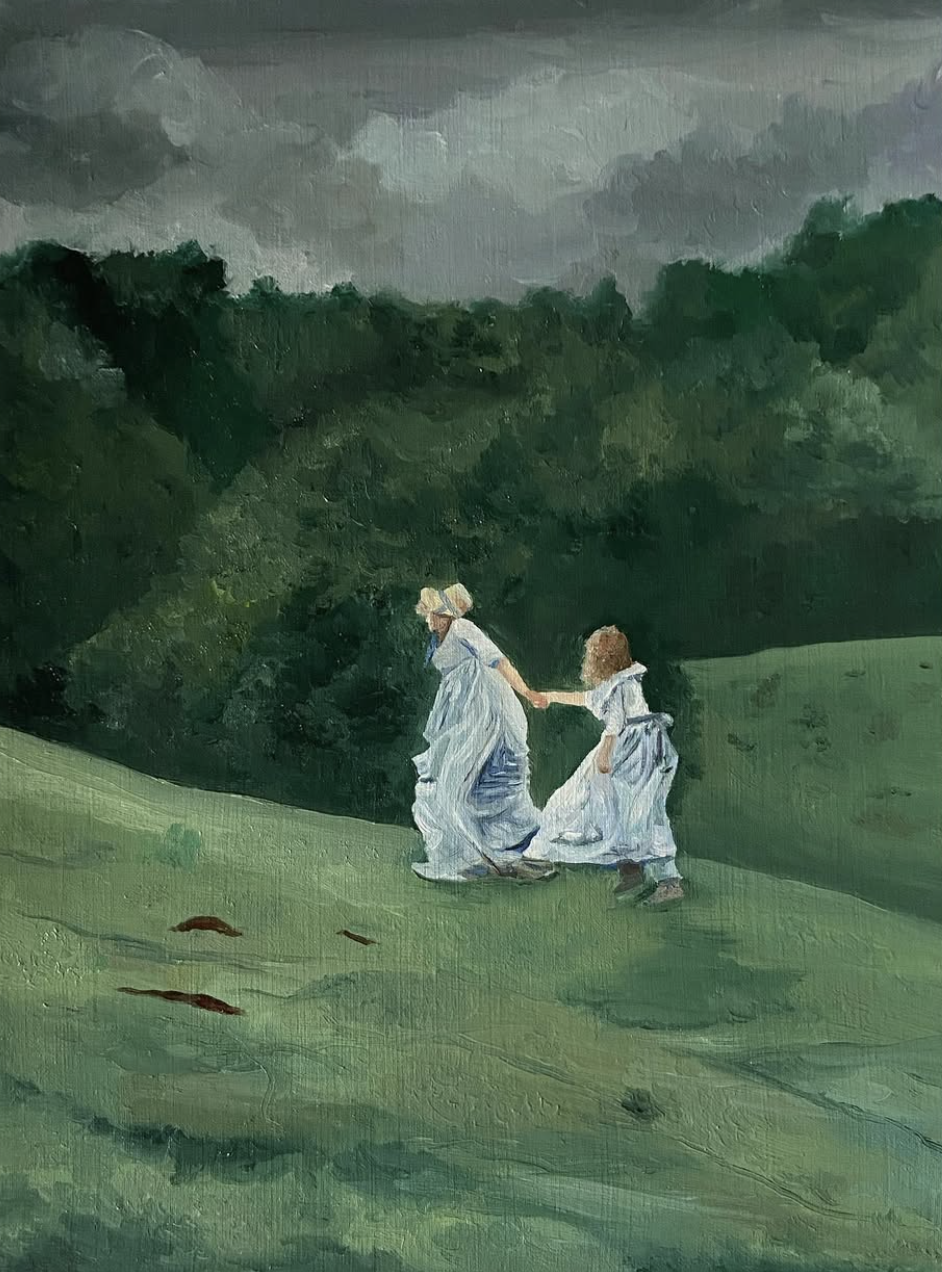
Oil painting, 2023. Zhanbolatkyzy. Photo courtesy of Zhanbolatkyzy.
In order to create a complete oil painting in the style of the old masters, there are several steps, including the original conception of the idea, the sketch, and a foundational layer - sometimes created by employing the technique of Grisaille: “a painting technique executed entirely in shades of gray, black, or another neutral monochromatic color. The word comes from gris, the French word for ‘grey’”. This is then layered upon by sheer colour glazes to add different colours to the hues of grey, light and dark, to create more dimension and the final image. How long does each step in the process take for you? What is your favourite step? Which step do you find you still need to improve?
The most difficult and time-consuming stage is the grisaille, where the painting’s main elements are established — tone and chiaroscuro. Sometimes this stage takes an entire month, especially when copying a painting with a large number of details. On average, however, if I’m not copying an old master or working on a portrait, it takes around 3–7 days.
My favourite stage is, of course, glazing — when real magic unfolds right before your eyes.
I still have a long way to go in perfecting both stages, especially the construction of form and tone during the grisaille stage.
Your portfolio shows that you have painted a wide variety of poses, and you have painted close-ups and wide views. Is there a particular pose of a figure in a painting that you find most aesthetically pleasing? If so, why? Do you find that a close-up painting requires the same effort as a wide-view painting? Do you employ the same painting techniques for close-ups and wide-views?
In every painting, I intend to explore a wide variety of forms and poses, so I don’t have any particular preferences.
In fact, the only real difference here may come down to the size of the canvas. What’s difficult is trying to squeeze a desired, highly detailed image into a small space. If there’s enough room, both approaches are equally manageable in terms of execution.
What is your current favourite colour? Has this always been your favourite colour?
A greyish, muted lilac, like rain clouds. It has always been my favourite colour.
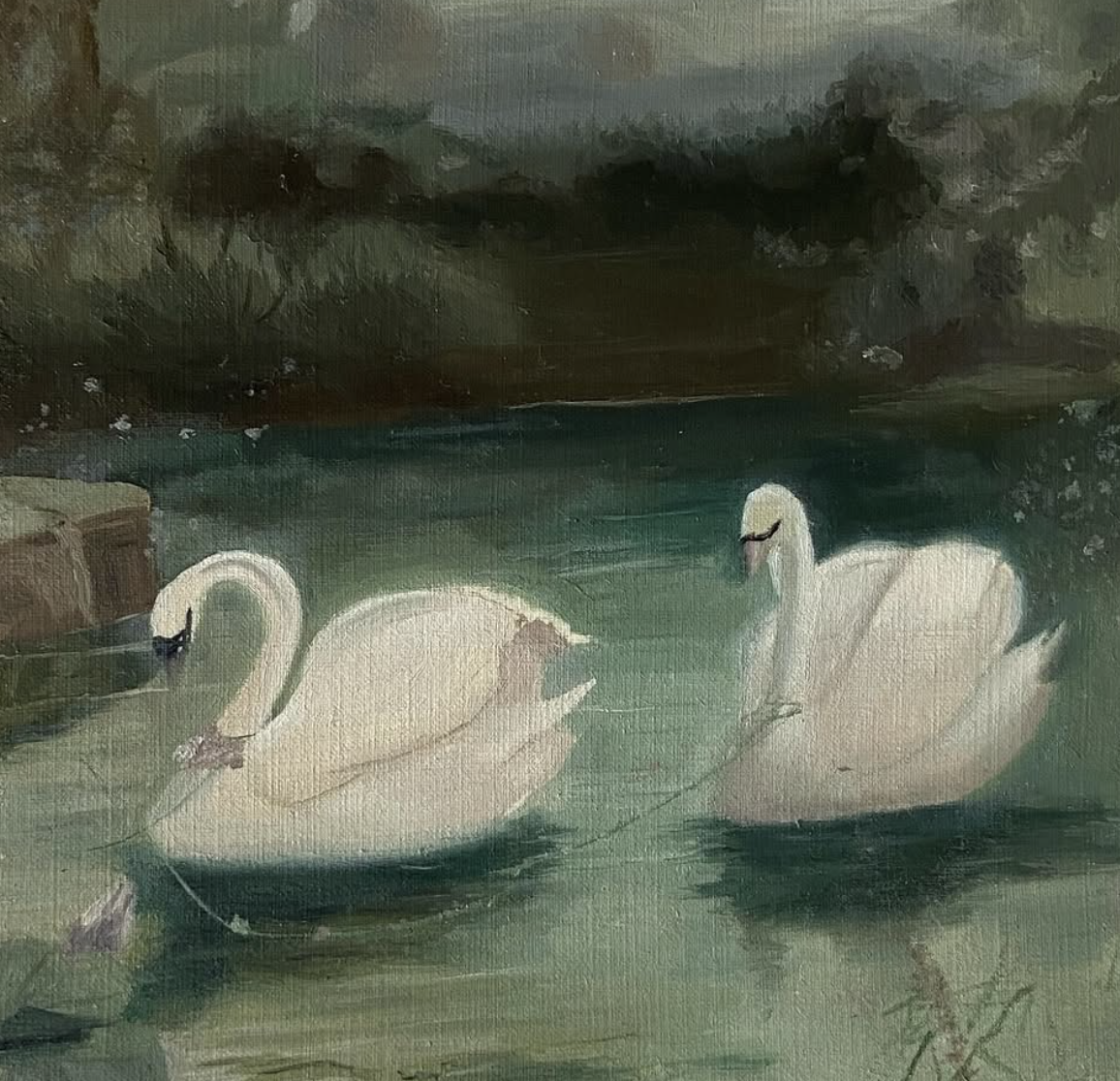
Oil painting, 2023. Zhanbolatkyzy. Photo courtesy of Zhanbolatkyzy.
What is your favourite piece of art that is not your own?
Primavera by Sandro Botticelli.
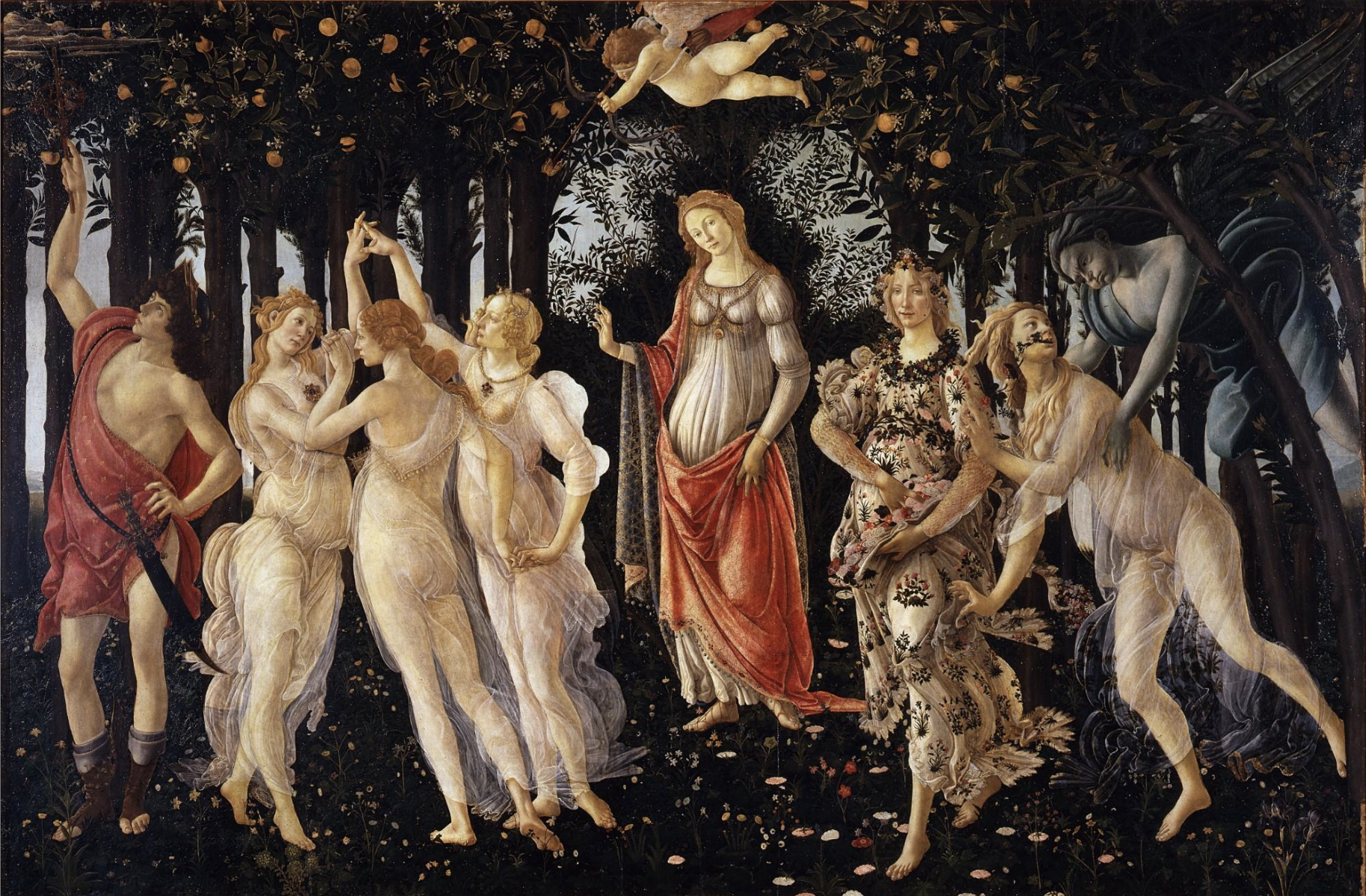
Primavera, 1470-1480. Botticelli. Photo courtesy of artandobject.com.
What is your favourite piece of art that IS your own?
I don’t have one yet…
Has an art piece ever made you feel a deep, profound, life-altering emotion? If so, what was it?
Yes. The paintings of Botticelli and Vermeer connected me to the heavens.
Where do you live and work now?
In Kazakhstan.
Is painting your full-time job?
No. I work remotely as a call centre operator. I’m grateful that this job allows me to pursue art without putting too much strain on myself.
If you had to have a non-art-related job, what would it be?
I’d like to be a scientist, a researcher in the field of physics.
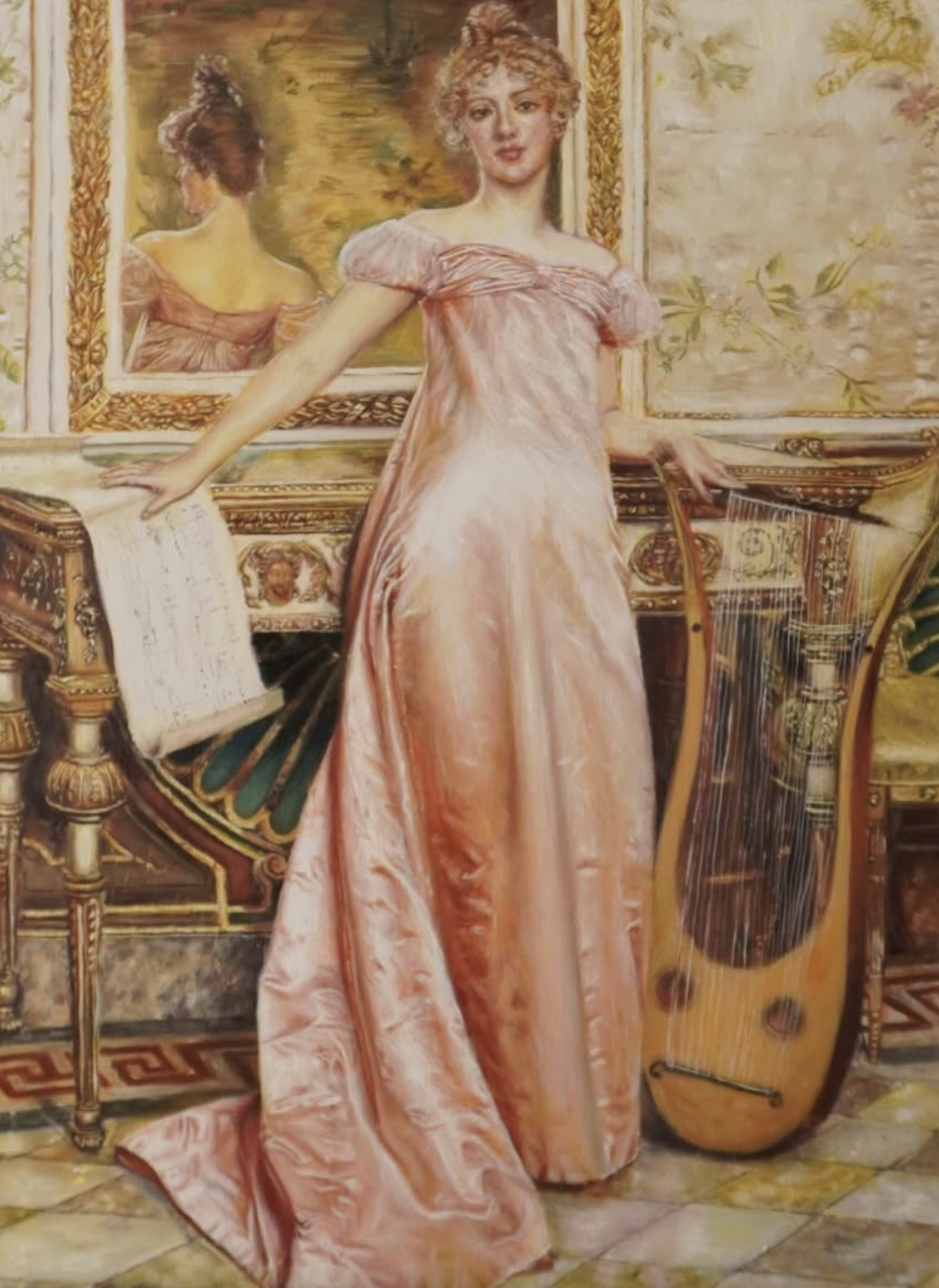
Mastercopy of “Her music lesson” Charles Soulacroix, 2026. Zhanbolatkyzy. Photo courtesy of Zhanbolatkyzy.
What medium of art do you think would be most frustrating for you personally to create in?
I’ve recently realised that there’s absolutely no point in categorically limiting yourself or closing yourself off to anything in life. For a long time, I couldn’t understand acrylics, but now I create all my sketches and even my grisaille using this wonderfully convenient, fast-drying medium.
Has a specific family member, friend, or person in your life significantly positively impacted your art career? Who? How?
There is no such person. Creativity is part of my inner castle, and somehow, what I do has never really interacted with the outside world.
What is something about the old masters’ painting technique that you think every artist today should know?
I’d say everything. From their fundamental approach to the craft to their entire way of thinking about artistic creation — all of it would be valuable to know.
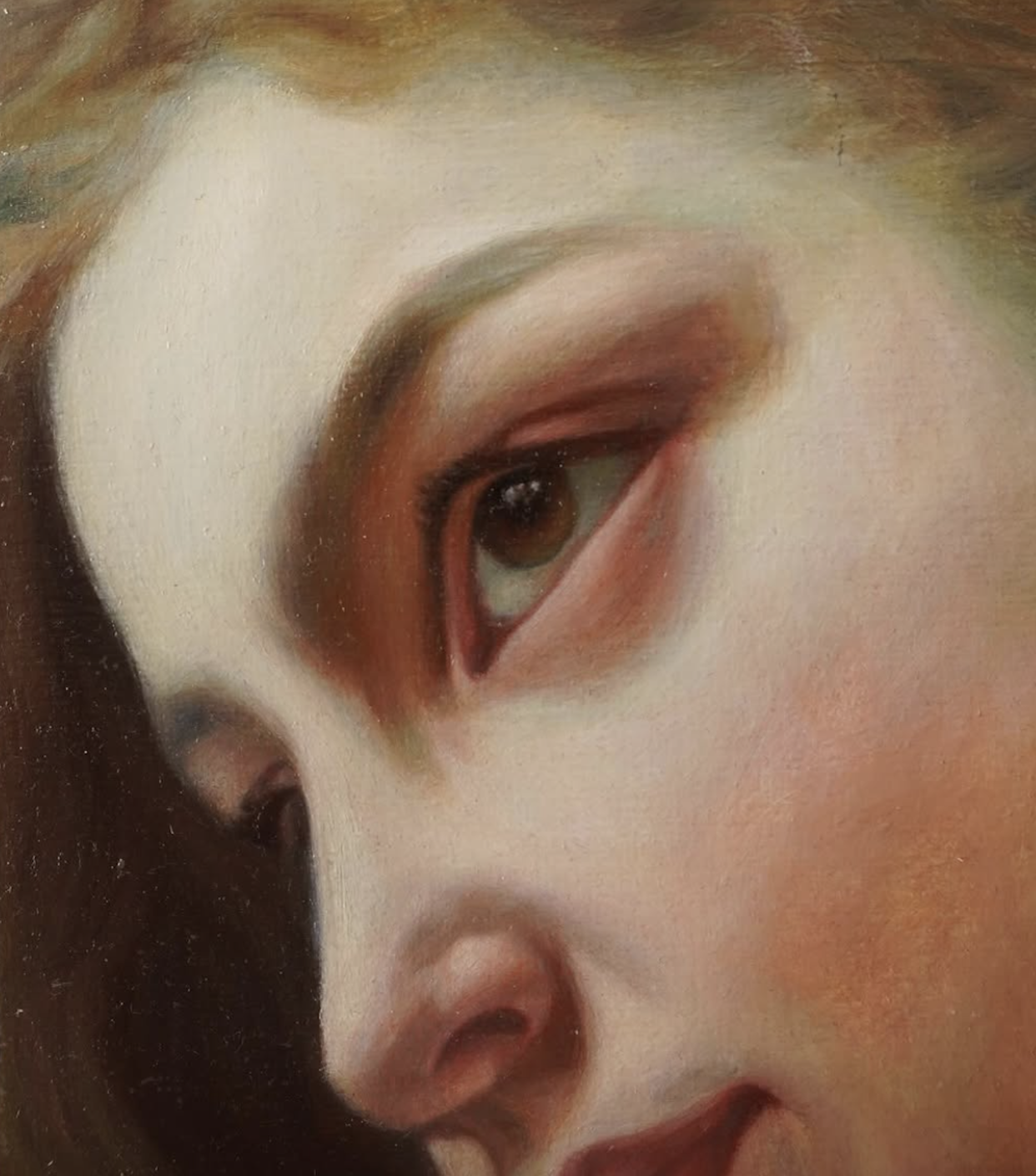
Oil painting, 2025. Zhanbolatkyzy. Photo courtesy of Zhanbolatkyzy.
It may not be possible to source the exact materials-pigments, paintbrushes, oils-that the old masters used, but it seems like you create pieces as identically as possible to the old masters. What are some modern techniques or materials that you use that you think enhance the style of old masters? Do you think any modern techniques or materials could advance the style of old masters?
I don’t deny that expensive materials, such as genuine lapis lazuli, can create an effect that feels more magical than ordinary ultramarine. And, of course, cheap brushes and surfaces can take away from the beauty of your work.
I dream of becoming a true master one day, and only then moving on to luxury materials. I’m convinced that at the beginner and intermediate stages, medium-quality materials are more than sufficient. However, you shouldn’t go for the cheapest options either. This can be detrimental because you end up attributing poor results to your own abilities, when in reality, it may simply be an unsuitable surface for oil painting that’s ruining all your hard work.
The accessibility and ease of the practical side of painting, thanks to technological advancements, help modern artists save considerably more time — whether it’s mixing paint or waiting for the sun to rise, and so on.
But in every era, the decisive factor will always be mastery of the craft itself, rather than cheat codes such as techniques.
Who is your personal favourite “old master” painter?
Botticelli!
What animal do you think you would be?
A hedgehog :)
What is one piece of artistic advice you want to share?
Practice > Theory and overthinking.
What is one piece of life advice you want to share?
Never stop thinking, but do more than you think.
Do you find that there is a large audience interested in collecting modern reproductions of old masters’ paintings?
I think the circle of people interested in reproductions is extremely small. Modern people tend to value originality, authenticity, and uniqueness more.
Do you find that there are many people training to be able to create these modern reproductions of old masters’ paintings?
I don’t think there are all that many, but neither are there all that few. Activities that require painstaking work are always unpopular.
Is there someone in your life who has greatly guided you or supported you, or inspired you in your artistic career?
Unfortunately, in my life, that person has only ever been myself.
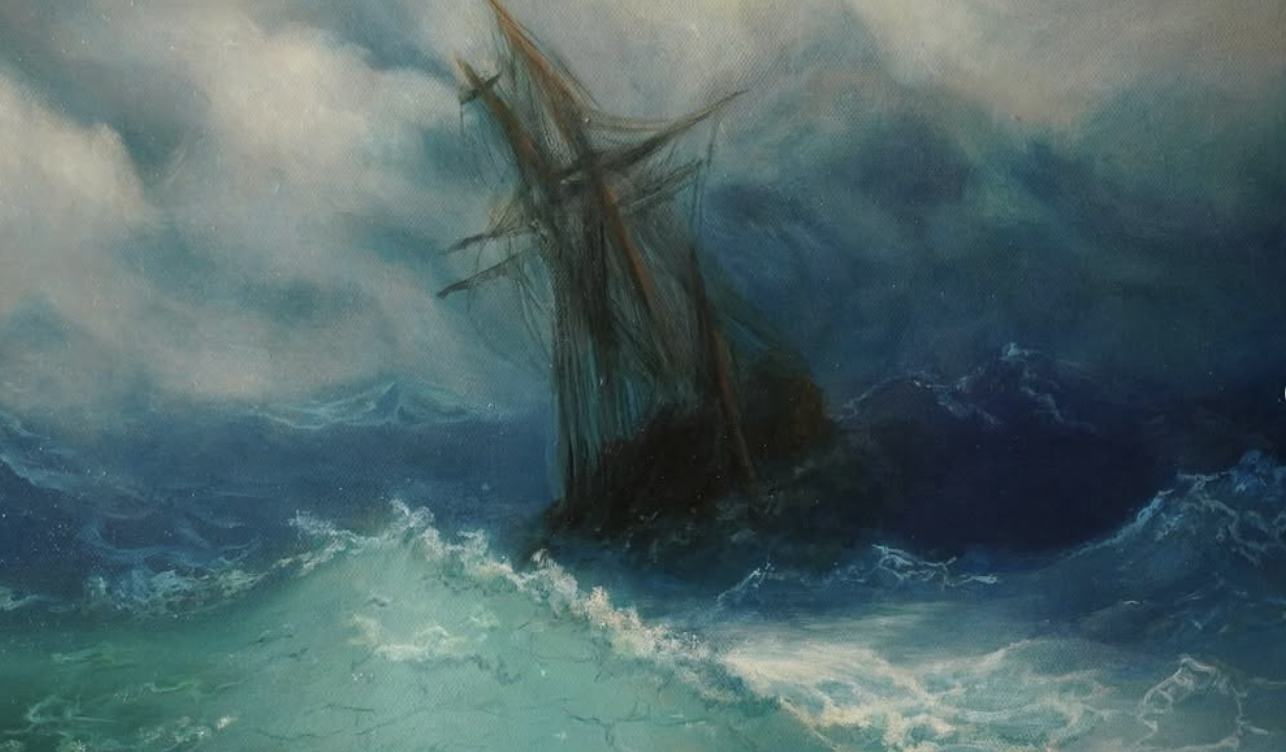
Mastercopy by me of “Ship On Stormy Seas. Ivan Aivazovsky”, 2025. Zhanbolatkyzy. Photo courtesy of Zhanbolatkyzy.
What is one non-art-related object that you will always have with you when you are painting?
I always listen to audiobooks while painting — it’s an integral part of my process. Right now, for example, I’m listening to Jonathan Strange & Mr Norrell.
Is there a time of day or night you feel most creatively productive?
As far as the practical side of painting goes, when I’m simply working on a painting I’ve already planned, there’s no particular time when I feel more productive. But when it comes to generating ideas, the hours after midnight are the most magical.
What do you love most about art?
The fact that it connects you to the infinite.
Is there a museum, institution, gallery, etc. that you dream of one day showing your work in? Where is it? Why this place specifically?
I don’t really have one. But I know for certain that the ideal way for me to promote my work and lead an artistic life would be through galleries and exhibitions. There’s something so old-fashioned about it, and it feels much more alive.
Do you think art is important? If so, why?
Art is the only source capable of providing answers to the troubling, frustrating questions everyone has about the meaning of life and the transience of existence.
What natural element do you relate to most? Air, fire, earth, water?
Air!
How can we make the art world better?
BY RAISING THE BAR.
Interview by Eliza Palmer
ART ZAZA would like to thank Aiym Zhanbolatkyzy for her participation. Learn more about Aiym on her Instagram: @aiymoonchild.