Further information can be found on Maxime Perron’s Instagram: @maxime_perron_ and on her website.
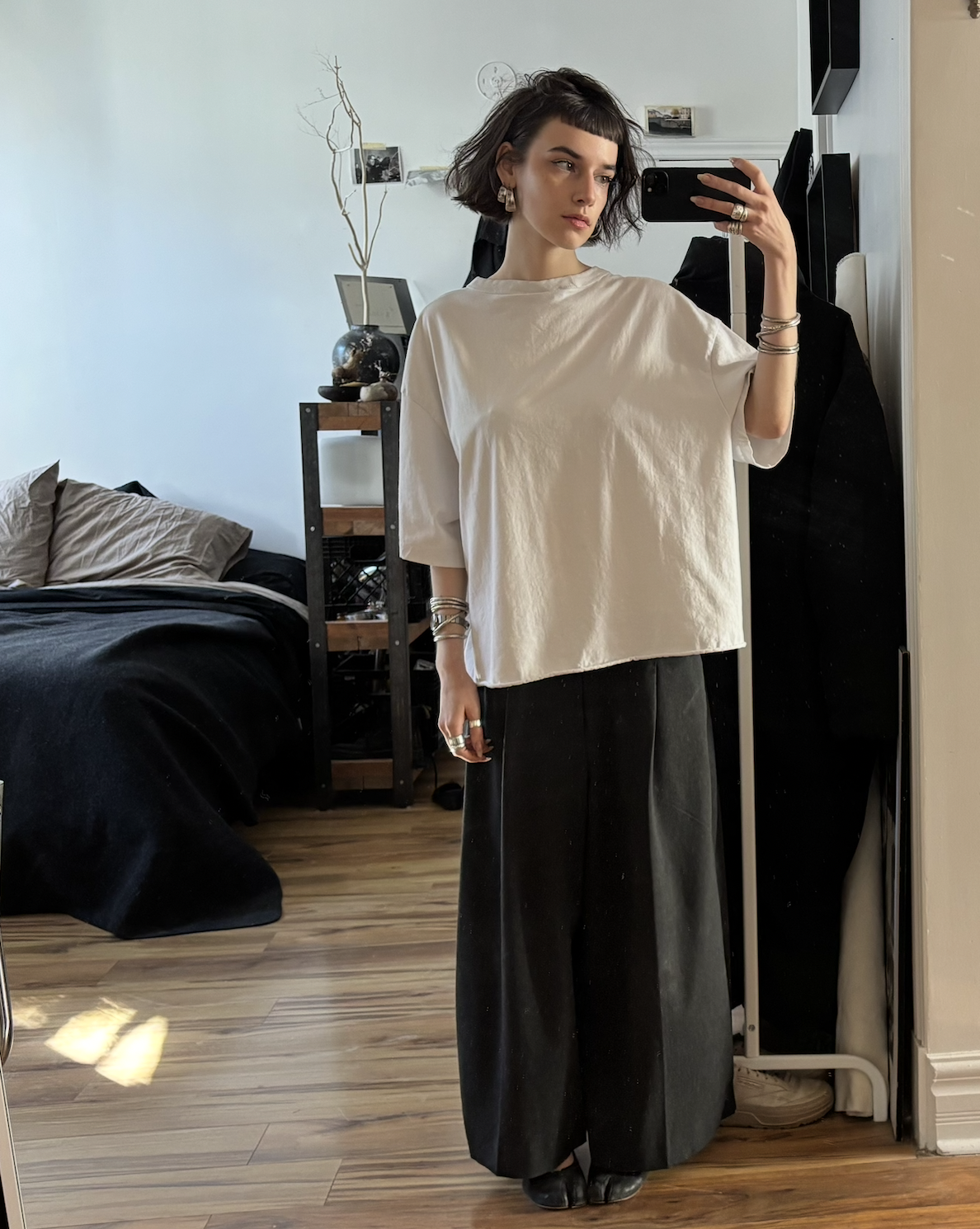
Maxime Perron. Photo courtesy of Perron.
Maxime Perron studies time in her work, creating long-lasting pieces inspired by the ephemerality of the natural world. Having refined her colour palette and her designs to a clean, serene style, Perron breaths life into clay and plaster. Perron’s attention to detail brushes away the extra, leaving behind an impactful minimalist portfolio.
What was your first introduction to art?
I think I've always been drawn to creation. I know of my firsts because I've been told by my parents or I've seen pictures, it’s been a part for me since before I could remember. But I think my earliest memory of art would be my dad’s drawings. He isn't an artist whatsoever, but he can draw pretty well and has this little auto portrait he makes of himself. I thought it was so impressive when I was a little girl. I've always had the opportunity to experiment with materials, my parents were kind of just letting me do whatever because it amused them to see me make a mess. I’ve covered the floor with flour and drawn on the couch before I was able to form memories.
What memory from your childhood do you think played a significant role in your development in the arts?
I think my parents were always really real with me. I've never been praised for no reason, for simply making something. If they liked it they told me, if it wasn’t up to my usual skill, they would tell me as well. I think receiving constructive criticism as young as I was, and being treated like a person rather than a child, has raised the standards I have for myself and formed an openness to current criticism. I've been realistic and at peace with what's good and not so good for a long time. I think of all the times my dad has told me “this isn't your best”, and I feel very grateful. It was never in a mean way, never about putting any pressure on me, they were simply honest with what was good for me, and what wasn't. Today I think that makes me a harsher, but healthy, self critic.
You’ve developed a minimalist aesthetic in your Instagram feed; your feed is a composition of art itself. When did you begin curating your feed this way?
As an artist, I think I'm a curator first, a creator second. Nothing with my name on it is to be ugly, if I'm associated with something, I make it look good, coherent, tasteful. There's no concession on that, about anything. I was 12 downloading fonts to change in templates before handing over an assignment. I've been curating everything that’s around me, in different capacities, forever.
I can confidently say that I’ve never posted on Instagram without thinking about the aesthetic element. I can’t say I love my earliest posts, my taste has obviously been refined since then, but my feed has always been thought out, and I've been very consistent with my aesthetic. I don’t see the point in posting something I don’t genuinely find visually pleasing. I'm simply quite obsessive about aesthetics and coherence, and I've always been. I like things to be beautiful. Instagram is simply a tool for me to highlight beautiful things in my life, and a way to control the narrative around myself.
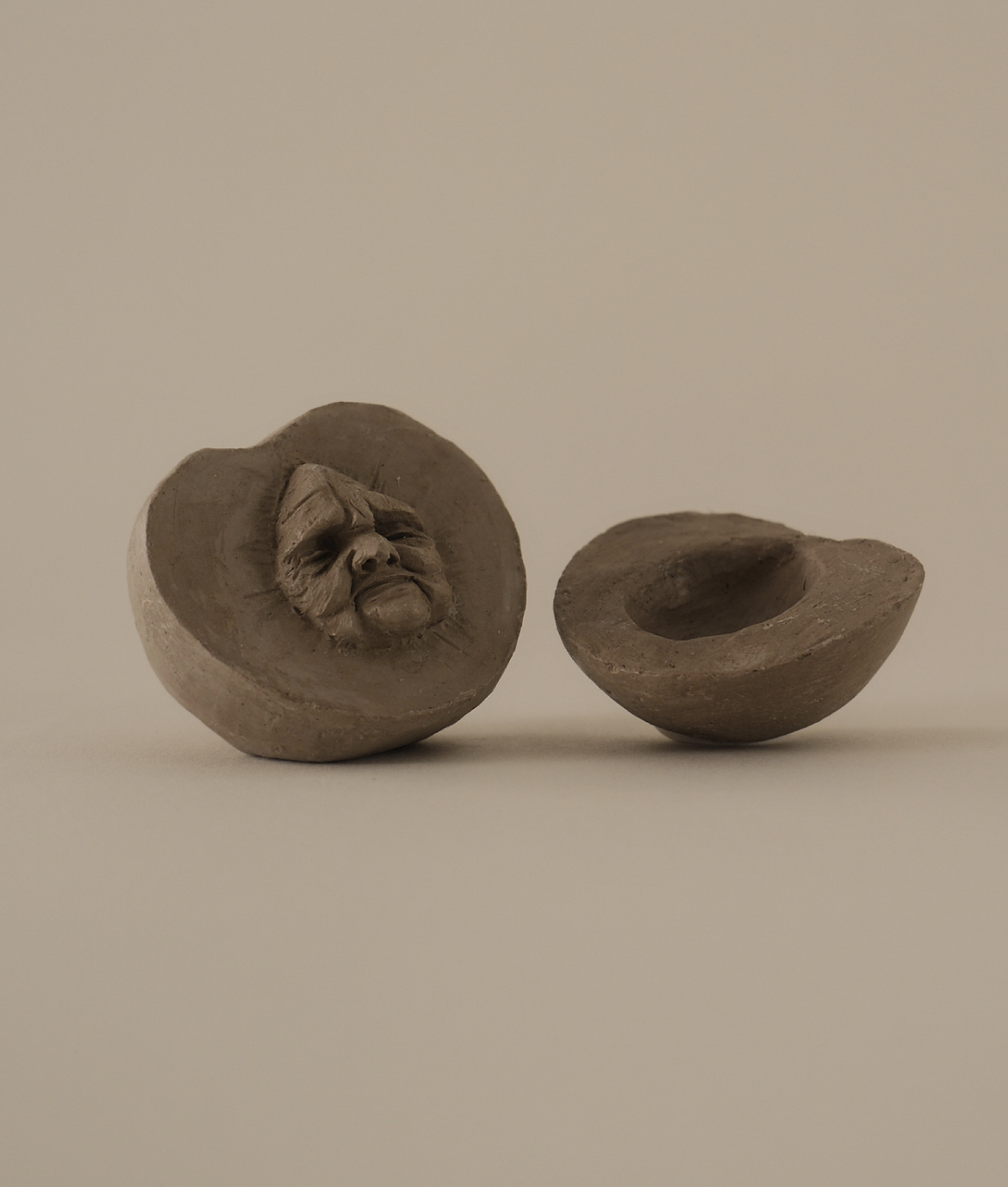
Prune, en deux pièces qui s’assemblent, 2026. Perron. Photo courtesy of Perron.
The idea of ‘Aesthetic’ has maybe, in the last 10 years or so, really gained popularity in terms of people who may not have previously been very interested in it now putting a lot of consideration into the refinement of their own aesthetic, and recoginising the aesthetic of others. How did you develop your aesthetic? What questions go through your mind when you are curating your aesthetic?
For me it’s about coherence. When things mismatch, I get really annoyed and if it’s in my control, I must do something about it. I've been at war with colours since before I could name them. I hate visual noise, incoherence, imbalance. I just care, you know? Some people care deeply about animals, people, rocks, name it, but I just really, really care about how things look, and what they mean. It comes naturally to me, and I can't let it go. I love beauty, I love to make it, see it, enjoy it, judge it, think about it, form opinions about it, talk about it, and I'm totally comfortable with valuing and seeking beauty. I don’t think it makes me superficial, it’s human nature to seek beauty, I just tend to do it more than most people I think.
I love to see things and read them. The way things look really does mean something about its value, its life, who curated or created it, who’s caring for it, etc. Even when people “don't care about the aesthetics” (like fashion or interior design), choices are always made, and choices mean something. I've always paid attention and cared about what these choices meant. Maybe that makes me judgemental, maybe it makes me analytic, maybe it’s both. (I wish to be clear: I am not talking about labels and/or what things cost; I'm talking about visual and practical choices).
With that in mind constantly, it is important to me what I put out there. So to answer your question, how did I create my aesthetic? I obsessed. I love to beautify my life, visually and philosophically, and I like that to be reflected in what I do.
You stated on your website that you discovered your passion for clay during a school project, and your inspiration was an old, deeply wrinkled man. What about him and his appearance left such an impact?
Honestly? Praise. Maybe you shouldn't say that, but it was the first time I realised the extent of the advantage I had over my school peers, and I liked it. My understanding of human face structure was impressive for my age and experience. I discovered how it was absurdly easy for me to do faces. Naturally, I still do such faces because it’s genuinely something I enjoy doing, I love to give life to a piece. Wrinkles are such fun to play with, they are so telling of a person's life and habits, it’s fascinating how changing only a few lines will completely change a character. But it did start simply because it’s something I knew I could do well.
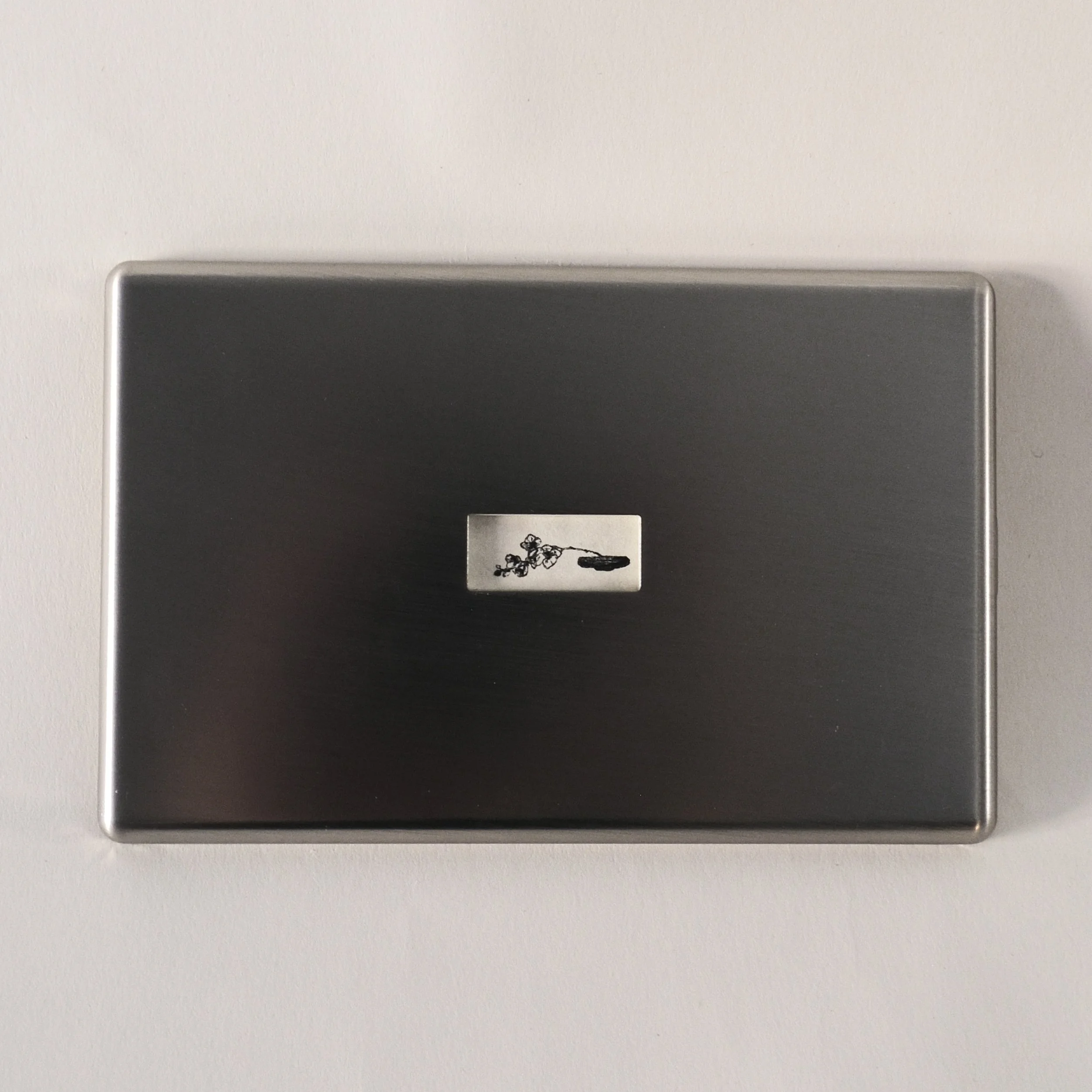
What artistic references do you use for your graphite drawings framed by light switch covers?
Just real plants that I find interesting in shape.
How did you come up with the idea to use light switch covers as frames?
I simply had a vision while actually looking for some. I found these seamless ones and it looked like a frame to me, so I made it into one.
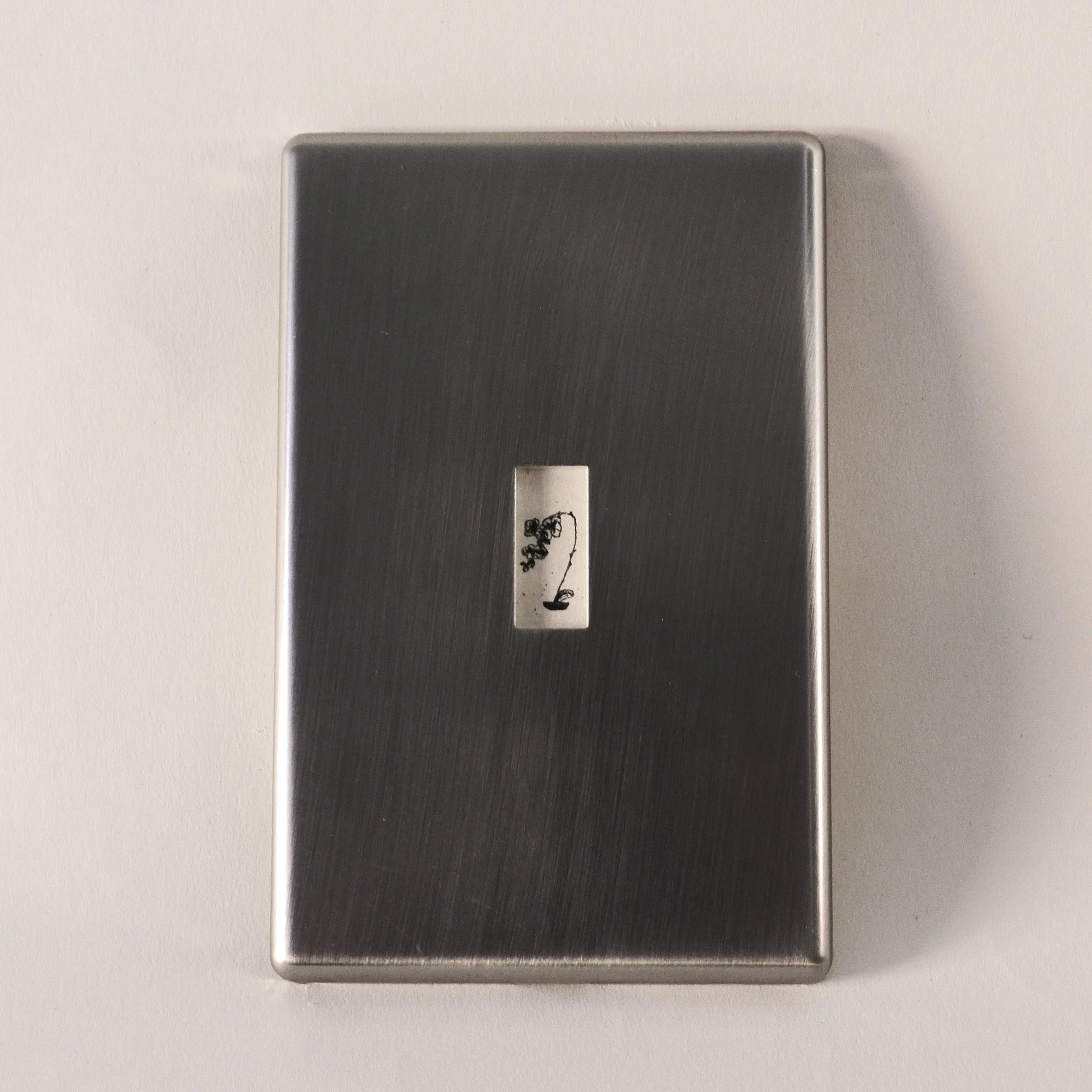
Orchidée verticale, 2026. Perron. Photo courtesy of Perron.
Can you walk me through your process of sculpting from the beginning to the end?
It always starts with a moodboard. Printed, always.
It usually starts with an idea for a fruit, then I find a face or two that fits the shape. I print everything and go from there. I start with the basic shape of the fruit, then the basic anatomy of the face, and then both the wrinkles on the face and the rest of the fruit.
For the trees it starts with a dead tree/bonsaï. I found a couple of bonsaï references that fit the general shape of what I plan to do with the existing tree. Then I remove a lot of the branches with the intention of rearranging it to look more sculptural and bonsaï-like. When the tree is completely dried i glue it to the bottom of its pot and pour cement over it. Only then will I attach back the branches I removed. Once I'm satisfied with the tree, I sculpt a bunch of tiny flowers and blooms, which I will arrange and glue on one by one. Sometimes I make a second round of flowers depending on what I think is missing.
Your colour palette relies principally on the natural, neutral colours of the materials you use in your work: the light grey of the clay, the different shades of grey and black of the graphite. What impact or effect do you think your colour palette of your work has?
For me, it’s just a continuation of how I live my life, and I find it to be the only way I feel sincere, the only way I feel at peace, and I think it’s important when it comes to putting it out there. There's a reason I love these materials, I use them because they are neutral. I like to think people who buy my art are people who look at the world with a similar view as mine, and I hope I can help, in a small or big way, to make someone's space feel more like what they wished it could be. To me, being very sincere about what I create makes it all the more special when people have interest, because I know that in some way, they are a little bit like me.
Who are some artists that have really influenced your work?
Probably the people who have taken care of the hundred-year-old bonsaïs I have saved in my Pinterest!
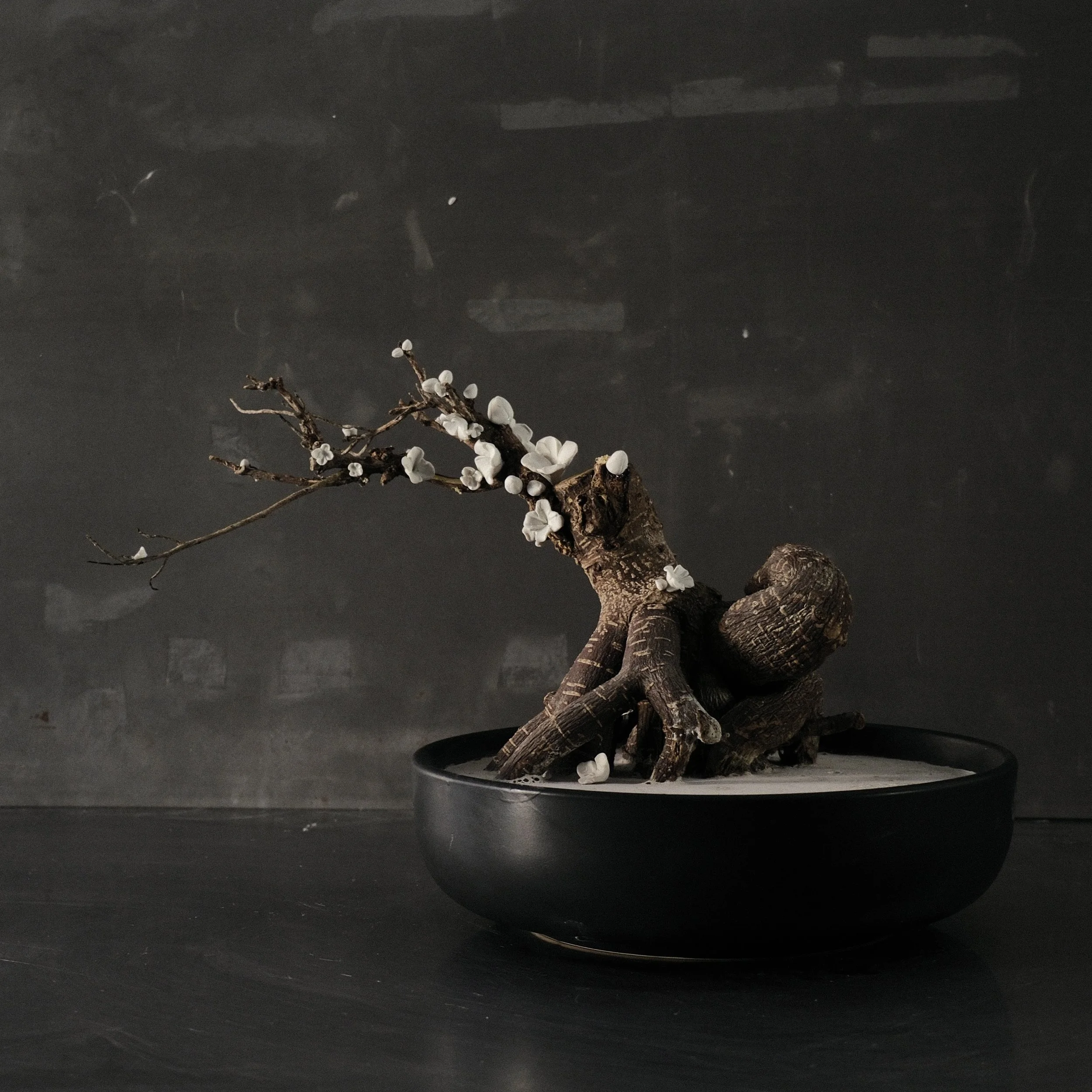
Ficus II, 2026. Perron. Photo courtesy of Perron.
Did you continue a formal education in the arts?
No! I had the art option while in highschool, but that’s it. After high school I stopped creating for about four or five years, and I only started again about a year ago. Everything I make is self-taught, from using material, to conceptualising, to selling it. I don’t create from what I know, I trust my vision and figure out a way to execute it along the way.
What other city would you really like to visit because of its art world and artistic culture?
Honestly, I'm not very knowledgeable about art, but I do love some good design. I love to travel to Europe simply to enjoy the aesthetics of it all. I went to Copenhagen for the design museums last year, and I really need to go to the Vitra Design Museum in Germany in the next few years. I’d love to go back to Japan as well and see some of Naotsugu Hashimoto's works, if I can. I obviously have an interest for the bonsaï, so I'd look more into that this time.
Time seems to be a prominent thought in your work. The idea of time passing, the slow physical changes time creates, is a main feature in your clay face sculptures. In opposition, your floral sculptures touch on how you have managed to freeze time, stop the wilting, and transform the plant’s ephemeral quality by creating these flowers in plaster and clay. Can you expand a bit on your interest in time?
I'm a big believer in taking care of things through time, keeping them and giving them back the love they give to us, caring for them as they care for us. Unvarnished wood, leather, stones and metals, I love how objects change with time, and how they grow with us. I think it’s a response to my absolute hate for plastic and overconsumption of cheap and brittle things. I like to buy something and never have to shop for it again. I much prefer caring for my own things than to change them over and over again. I don’t think it’s for everybody to reseal a table, boots and knife handles, but I personally think that the valuable things deserve time and care.
Also, as a woman, advocating for the beauty of aging is a rebellion against this idea that time takes away from women. It's objectifying and completely wrong. I hate that we degrade women because they are living creatures who experience time like everything else, and I love that this point of view reflects in my work. I love older women, I can't wait to be one, to have long greys and wear an absurd amount of jewelry. Things and people age, and it’s beautiful. Not everything, not everyone gets the chance, and the marks time and experiences leave on our bodies and objects are the witness that we lived. Everything is a memory, an experience, a story, a feeling. I like to think of the blooms on my old-looking trees to be a metaphor for the constant change and growth we can experience as humans, no matter the age. There's always a new way to bloom.
I care deeply about what's around me, and it is very important to me to keep things genuine. I cannot stand this trend of plastic things that “don't need any care” but that break anyway, I will not have it, and I will always advocate for the things that naturally age. I hate how some new “solid wood” furniture is so heavily varnished they look plastic. Things today are often so over-produced and modified, I desperately seek natural materials that will stay and age with me. As an artist I'm not used to selling my craft and talking about it in some meaningful way yet, but if there's one thing I love to talk about, it’s this aspect of it, because it is sincerely something I believe in. Time is a gift, and the marks it leaves just come along with it.
Do you think it is important that people in general think about time?
Yes! I think people don’t always realise how little we have and forget to think about what they truly, truly care about, before it’s too late. Like how much of your time is spent doing things you hate? How much of it do you spend wishing it was going faster? People talk often about killing time and I think it’s so strange to want to throw away time, when so little is given to us. I care about time and how I spend mine, and I think that’s why I also care so much about how it shows up, it’s a reminder, on me, on my things, on my loved ones. How beautiful it is to see my friends age with me.
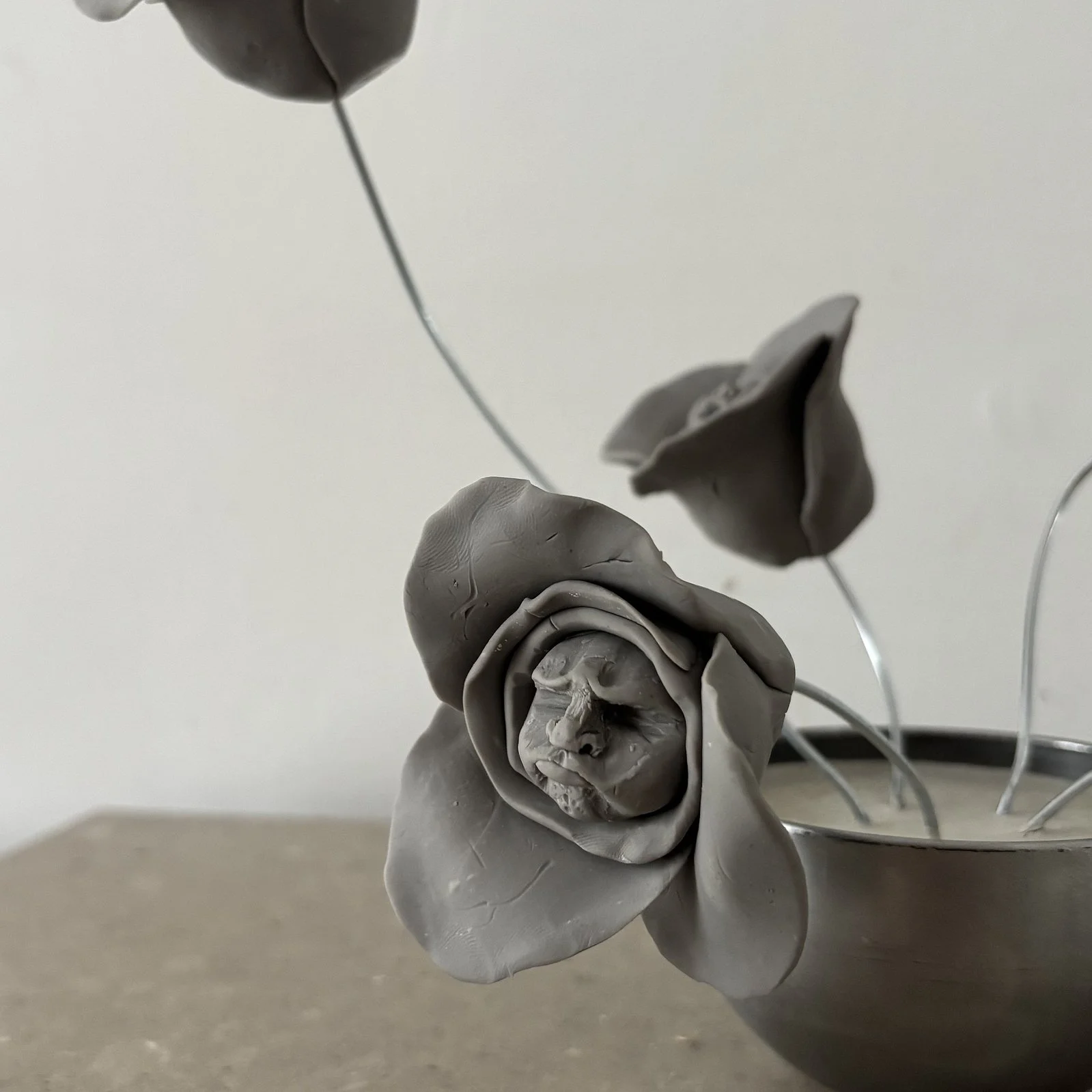
Fleurs, 2026. Perron. Photo courtesy of Perron.
If you could exhibit your work in any museum, gallery, institution anywhere in the world, where would you dream to show it?
I just want to be “someone” in my home city. Any exposition anywhere would be a dream, but my home is where I want to be, and if I am to be esteemed anywhere, I wish for it to be at home. I would love to work with some galleries and the museum in Québec City. I love to ship internationally, it’s honestly surreal to be printing shipping labels for Italy and Germany, but I love it most when people from my community have an interest in what I do. The love and encouragement I've received here has been closer to my heart than any other praise online (which I’m super, super grateful for, of course).
What time of day/night do you feel most creative?
I have more of a monthly sudden motivation and energy for it, where I wake and it’s what I do for the following 16 hours, and then I am excited to wake up and start again the next day. It usually happens for a week or so, and the rest of the time I work more on the boring, business stuff. I am a creative person and an analytical person, just not at all times, so I work around it.
Did you ever work in colour or have you consistently had a more neutral colour palette?
Except when I had restrictions in school projects, it’s always been neutral.
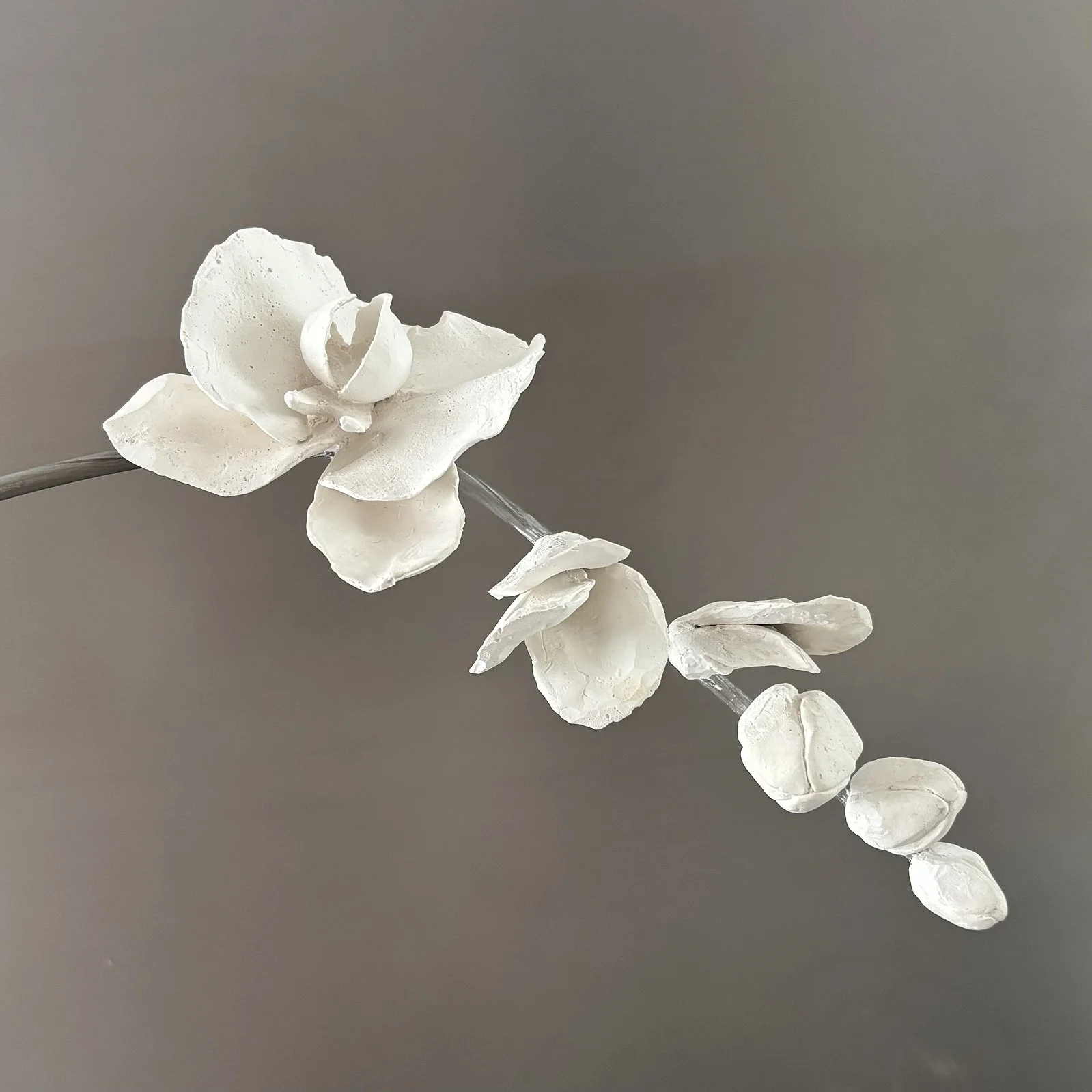
Orchidée horizontale, 2026. Perron. Photo courtesy of Perron.
What impact do you want your work to have? Do you care if it has an impact?
I can’t say I'm here to have an impact, but when I speak of how things that I care about are reflected in my works, I hope it can spark something in someone and maybe change their mind a little bit. But in all truthfulness, I make things that I visually like, there's no intention to make an impact whatsoever, even if sometimes it is heavily influenced by my beliefs.
What are some misconceptions people might have about you as an artist based on your works?
I don't like flowers. They are usually very colourful and messy, I don't want flowers from a man, I don't want them on my table, I hate hate hate flower patterns, none of my plants are plants that usually bloom. But they are SO interesting from a sculptural point of view. I've only recently been working with them and studying them. I have to say my references tend to be white or very dark flowers, I'm just very drawn to them a lot more, and I much prefer a thing that is visually interesting through shape or texture than through colour.
What is your favourite piece of art that IS your own?
I think I have yet to make my favorite piece. I have only recently started playing around with dead trees, and I'm so excited about what’s to come, it doesn't even compare to what I've done yet. But in general, I'd have to say it’s the small collection of dead trees with white blooms.
Has an art piece ever made you feel deep, profound, life-altering emotion? If so, what was it?
I think I interact a lot more with other kinds of art, like music, than with other visual art. I've been moved by concerts more than anything, and interacting with musical artists has been the most motivating thing for me yet. I think I feel it a lot more. I don't know if it’s super self-centered, but I interact mostly with the art world through what I share and create in it. I don't consume a lot of art and am kind of unaware of what's happening.
What other artistic practice would you like to try that you don’t currently do?
I'm really looking forward to working alongside architects to design my future home. I think architecture is fascinating and has the power to have such an important and significant impact on daily life. In my opinion, in a living space, the most striking and interesting thing you can have is a particular architecture.
Fleurs, 2026. Perron. Photo courtesy of Perron.
Do you listen to music or the radio when you work?
I usually put a record on and then never turn it off or change it because I'm too deep in what I'm making. If not, I’m probably re-watching Sex and the City.
How can we make the art world better?
Maybe we could stop worshipping awful men who preyed on women?
What natural element do you relate to most? Air, fire, earth, water?
I think earth, to me, is the closest to the human condition. I think of trees with their bark, of cycles and growth. I do compare people to trees and fruits in my work, so it seems fair to say I feel closer to earth
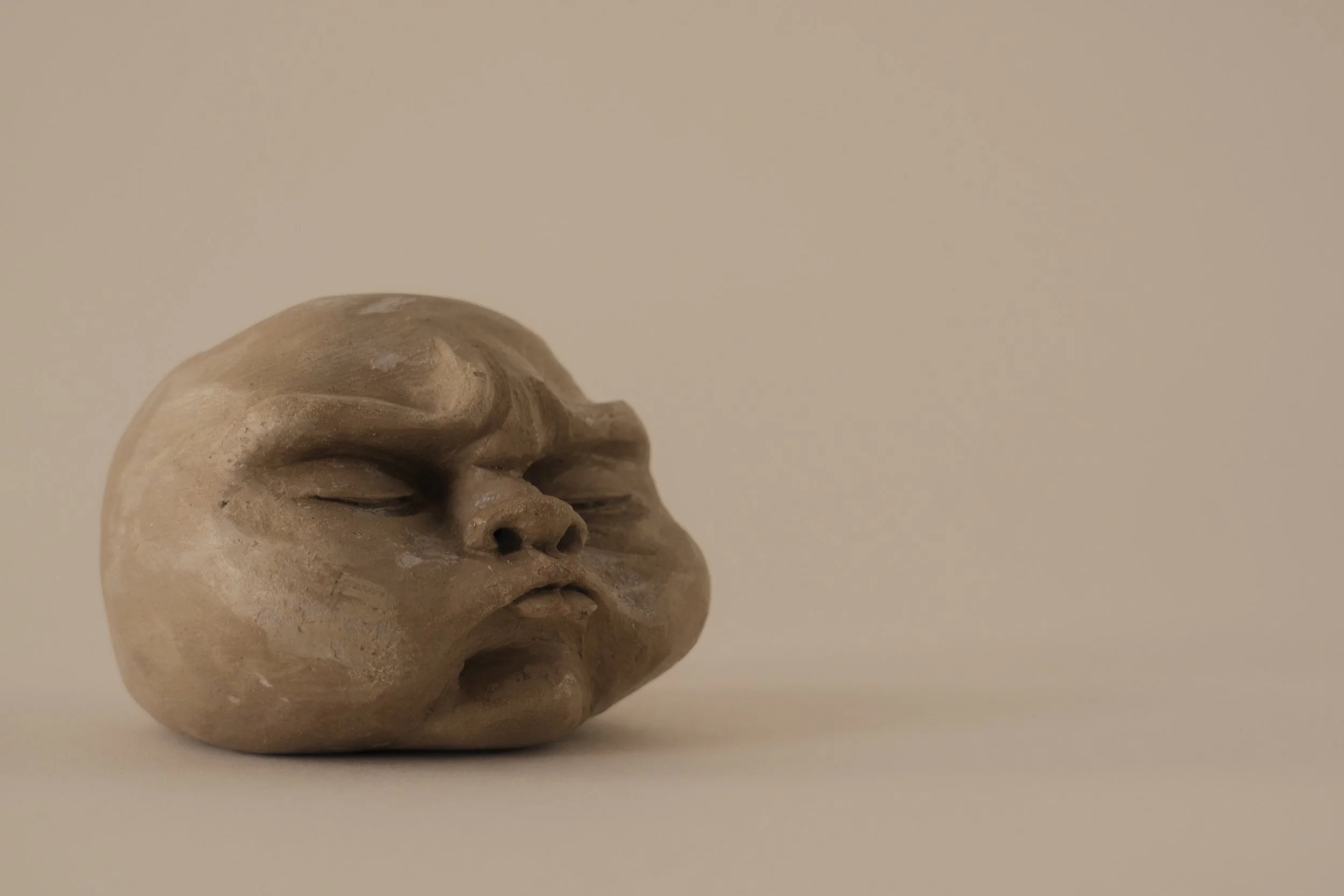
Lampion, 2026. Perron. Photo courtesy of Perron.
What are some things you like to do outside of making art?
I've been a bartender up until very recently, and of all the non-art things I've done, this is where I had the most fun. I love philosophy too. I thought of studying it, but decided I didn't want to be miserable.
What is one piece of life advice you want to share?
My favorite thing to say to people is “La vie de tes rêves va pas te tomber dessus accidentellement” which means “your dream life will not fall on your lap accidently”. What I mean by that is that dreaming is a scam, if you want something you have to reach for it. There's dreams and then there's goals, don't be fooled into hoping that your wishes will come true on their own. Be bold, ask and reach for what you desire most. You can’t count on winning the lottery, especially if you're not buying any tickets (metaphorically speaking).
What social, cultural, and/or charitable cause do you care deeply about?
Social disparity in general, locally and internationally. I think there is true evil among us if there is SO MUCH STUFF around, so much production, while so many have access to nothing. Parts of the world are killing the planet while consuming, while other parts are dying because they have nothing. Part of neighborhoods are hoarding absurd amounts of wealth, while parts of neighborhoods are starving. I live close to a lot of homelessness, there's a major housing problem in Québec, and I find it completely revolting that we have people outside. But it’s not only here, it’s everywhere, it’s whole countries and communities. It’s so fucking weird to have access to such mass production and means, but have these absurd inequalities.
ART ZAZA believes in the power of kindness and community support for those who may need it. Inspired by Perron’s message, ART ZAZA encourages readers to check out charities and organisations helping people experiencing homelessness in Quebec, like Transitiôn.
Interview by Eliza Palmer
ART ZAZA would like to thank Maxime Perron for her participation. Learn more about Maxime Perron on her Instagram: @maxime_perron_ and on her website.