Further information can be found on Eric Stefanski’s Instagram account @ericstefanski and on his website, ericstefanski.com.
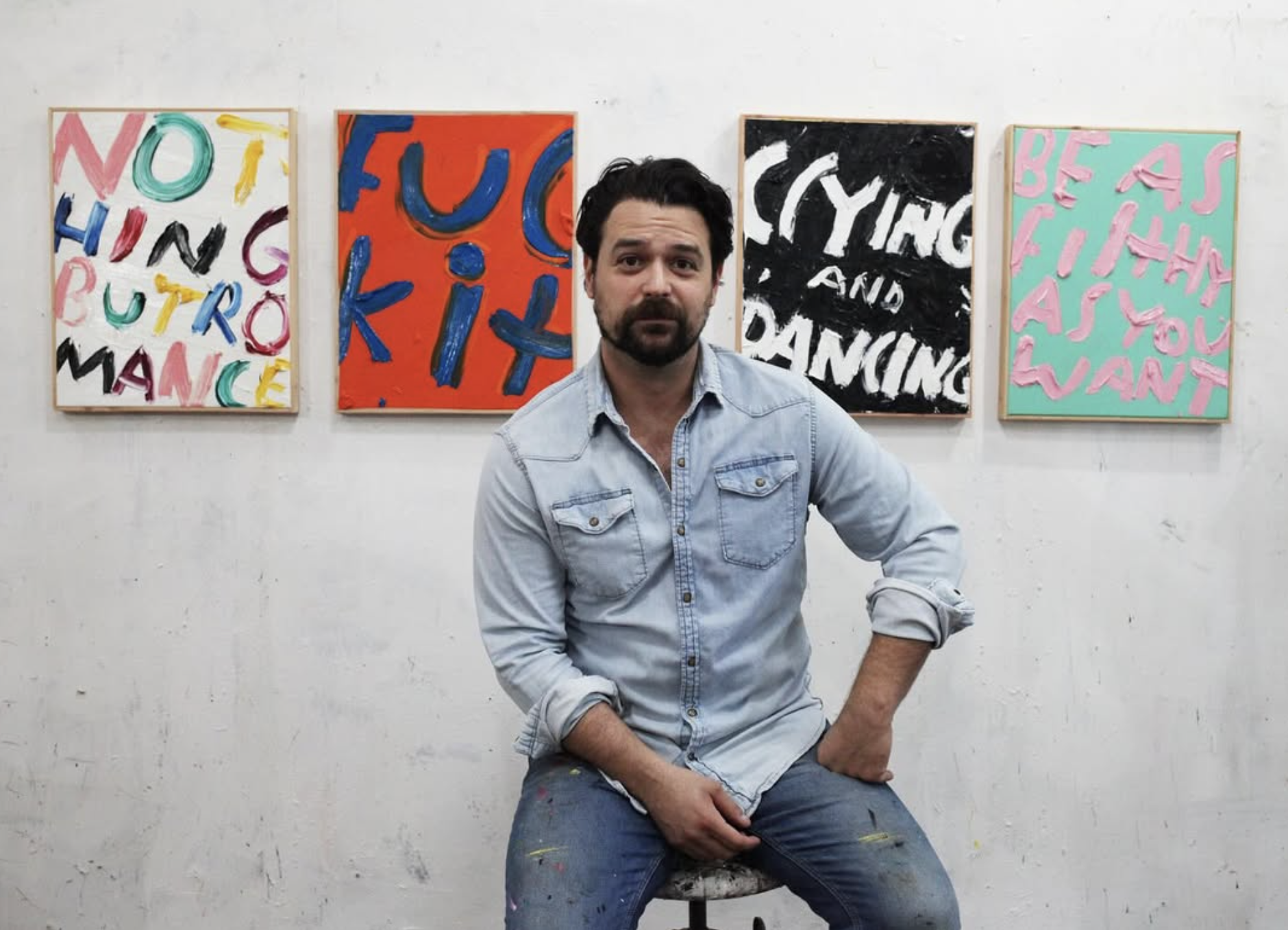
Eric Stefanski. Photo courtesy of Eric Stefanski.
Artist Eric Stefanski transforms his ideas into paintings in a quite literal way, painting the words that describe the emotions and ideas at the forefront of his mind. Inspired by conceptual artists like On Kawara, Stefanski documents the ups and downs and the good and bad of the human experience. His work is both instantly impactful and asks the audience to take the time to reflect and introspect. Stefanski’s paintings deliver relatable statements that excite, move, and amuse the viewer, engaging our own thought processes to question his sentiments through our own unique lenses.
What was your first introduction to art?
Fortunately, I had a very good art teacher in the public elementary school I attended. Very early on I was being introduced to works by Renoir, Frida Khalo, Van Gogh, George Seurat, and Henri Rousseau. It sparked a lifelong passion.
Once you have an idea for a written text, how long until it becomes a finished painting?
Usually very quickly, sometimes as early as the next day's studio session. I keep an open tab on my phone, computer, pieces of paper etc. that I will write ideas down. It could be as simple as a single word or how I was feeling at that moment.
Do you ever change the text once you start actually writing it on the canvas? Do you ever have to ‘erase’ or put in or take out more words?
Constantly. I try to distill it down to its most basic form but the editing can still happen in the process of making the work.
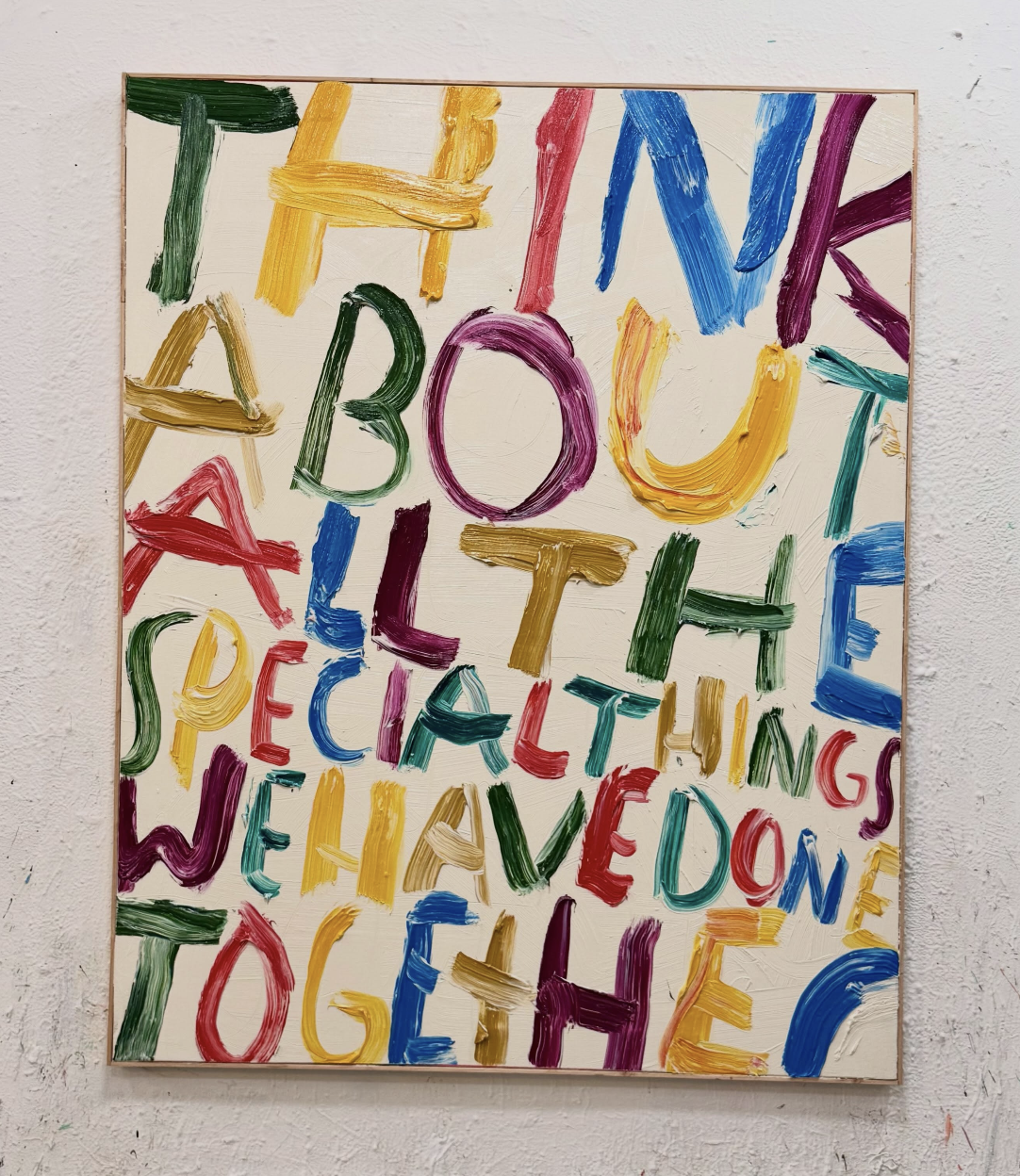
Studio view, 2026. Stefanski. Photo courtesy of Eric Stefanski.
How did your work change once you became a parent? Did it change?
Formally, no but there has been a slew of language that has been directed related to the anticipation of his arrival, the experience of seeing him being born and watching him grow. So far it's been incredibly rewarding making these works about him.
How did you develop the font? It’s typically a combination of uppercase and lowercase. Is it your font that you write with yourself?
It is, I have always had "poor" penmanship, which is a combination of both lowercase and uppercase letters. Also, I use print and cursive sometimes interchangeably even within the same word. I physically write with a sense of urgency which hopefully translates also in the paintings.
What size brushes do you most often use for your font?
I use multiple brushes for the same work to break the monotony of the language. I also use brushes I have made, rags, sponges and often write directly with my hands.
What effect do you want your work to have on people? Do you necessarily want it to have a real effect on people?
Of course, I want them to see it within the lineage of art history and hopefully within the context of their own lives. I make the work selfishly for my own pleasure, ego, needs etc. but it's always special when I receive feedback from people on how much a specific painting they relate to.
Do you have a preference for working at a specific scale or size?
I definitely do. My favorite size is 60x48. It's small enough to work in quieter moments but also large enough to have a physicality to it. Depending on the language and intent, you can make these grand gestures that are both sincere or ironic.
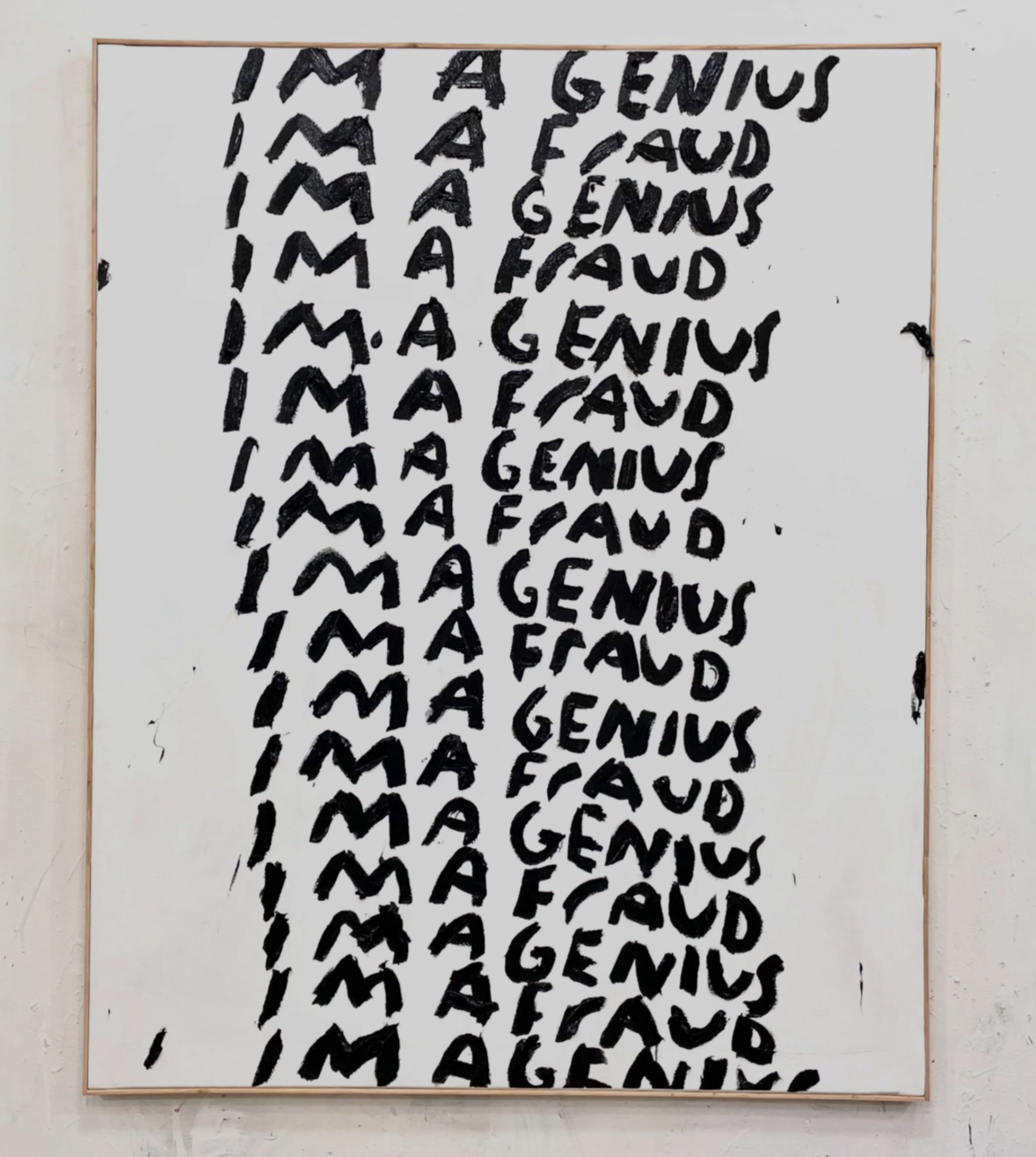
Oil on canvas, 2024. Stefanski. Photo courtesy of Eric Stefanski.
What is your favourite piece of art that is your own?
It is new and currently hanging in my living room. It has all the information on the birth of my son.
When did you start really using social medias and the more modern online pathways to share your own work?
It started organically, even before I went to grad school. It was just a way to show other friends and artists the things I was making in my bedroom studio. Now, a good portion of people that discover the work find it through there.
What is the art world like in Chicago like? What are some things you most like about living and working in Chicago?
In a lot of ways I am removed from it. I don't have many shows or collectors here. The work usually heads to the coasts or overseas. I dont attend many gallery openings or find other ways to engage with it. I think not going to graduate school here also plays a part. I love working here though. I am from here and can't imagine permanently living anywhere else. I like that no one cares what you do here, you are treated the same. It's also very easy to make work here which is especially important when starting out.
Do you listen to music or the radio when you work?
Constantly. There are "building days" here and "Painting days" When we have to build crates, stretch paintings, prep paintings for shipping etc. it is a lot of podcasts or indie rock. For "Painting days" it's much quieter. A lot of Bach and Jazz.
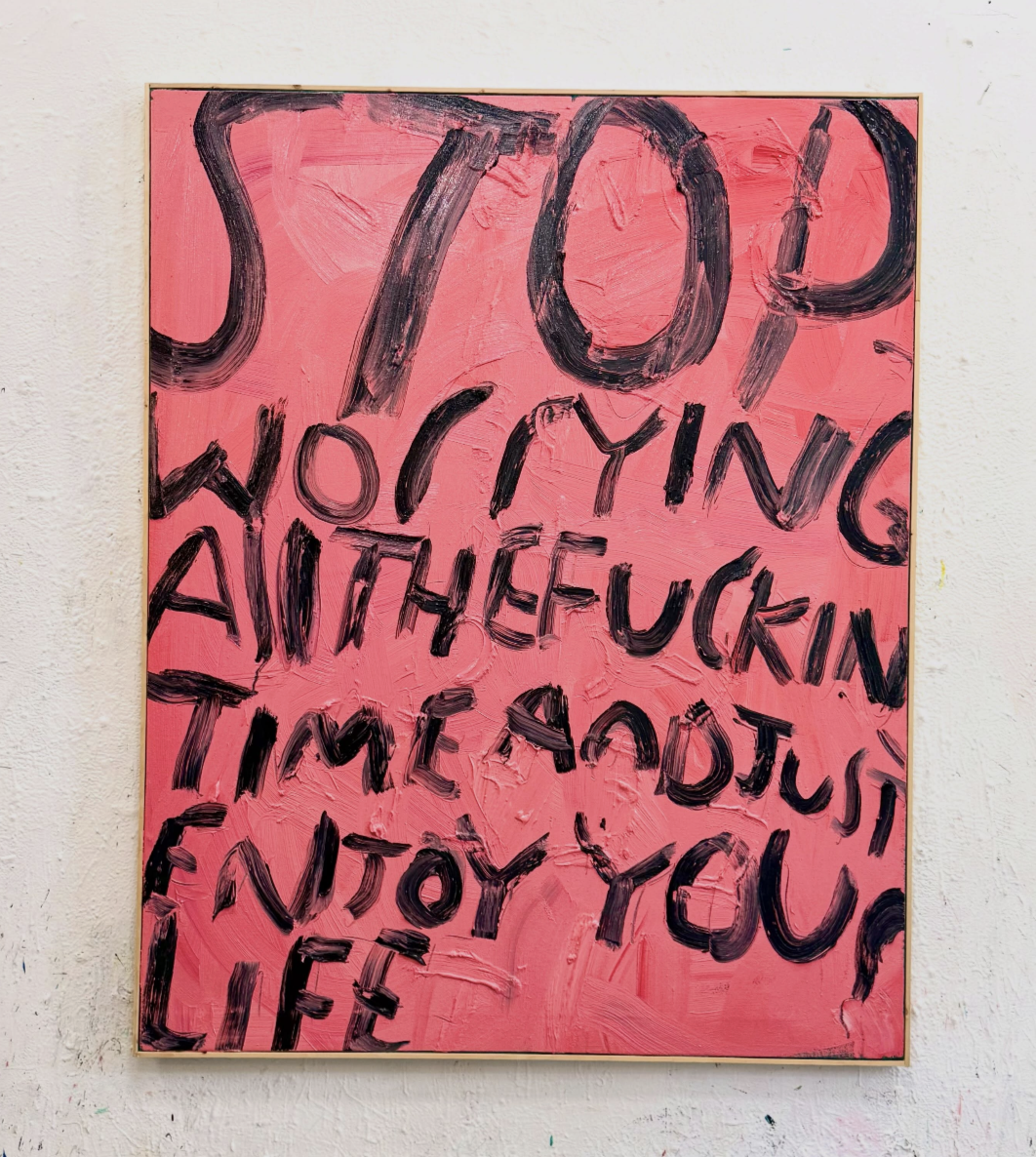
Studio view, 2026. Stefanski. Photo courtesy of Eric Stefanski.
What is one piece of artistic advice you want to share?
Make your studio as comfortable as possible.
What do you love most about art?
How challenging and heartbreaking it can be.
Interview by Eliza Palmer
ART ZAZA would like to thank Eric Stefanski for his participation. Learn more about Eric Stefanski on his Instagram account @ericstefanski and on his website, ericstefanski.com