Further information can be found on Teshome Douglas-Campbell’s Instagram account @ark_rube and on his website, teshomedc.net.
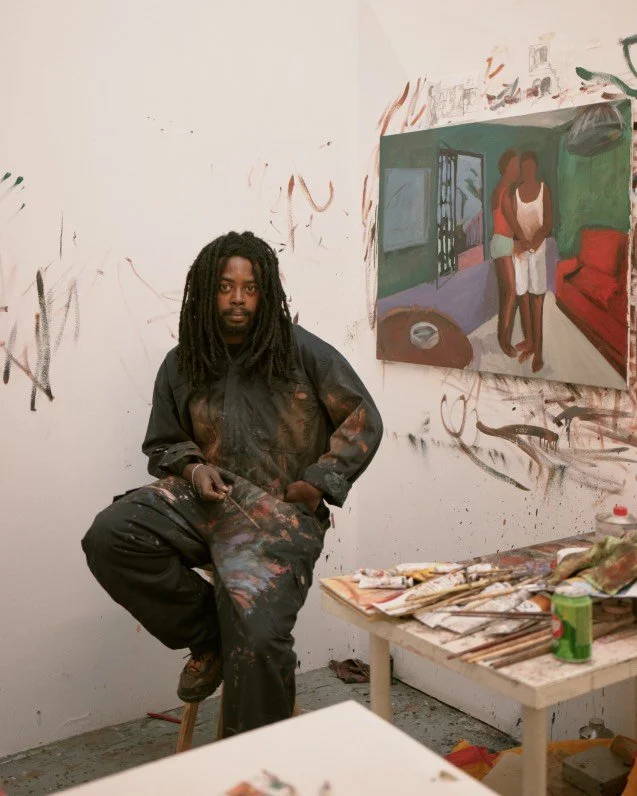
Teshome Douglas-Campbell. Photo courtesy of Teshome Douglas-Campbell.
Artist, writer, collective director, member, and active community member, Teshome Douglas-Campbell has set out to bring light to his interactions and works of art. Based in London, Douglas-Campbell speaks about his lived experiences, his view of the world, and his deep love of culture in his colourful, touching, fabulistic works of art.
What was your first introduction to art?
To be honest, I always remember drawing, whether it was tracing the books as a child or collaging at school, it’s always been something I knew I felt happy doing, so I never really stopped.
Where do you find inspiration for your work?
I’m a firm believer that no one needs to look that far for inspiration. Often some of the most interesting things are within us.
There’s something to be said about the images, icons and symbols which slowly transition from the subconscious to the conscious, that reveal more about us and our environment than we give credit for.
A lot of my inspiration comes from this well of which is my life experience, remembering things and visually documenting those memories and images which drift to the surface as a way of asking what they say about me but also the time in which we’re living.
Your painting work often shows people in moments of intimacy - not directly sexual intimacy, but moments of platonic or familial intimacy, like moments of connection and moments of communication. Is that a sentiment that you create consciously?
It’s not super conscious, but I really love this idea of intimacy between the painting and the viewer as well as the subjects I paint. A lot of the work references my Jamaican heritage and Jamaican culture. I've really enjoyed exploring these quiet moments of intimacy in a culture which is super loud and braggadocious.
How do you go about beginning the process of creating a work of art? What is the first step?
It all starts from a doodle, often making a drawing when I’m in a little bit of flow state. And then it’s just about taking the seed of that idea in the drawing and growing it in a bigger form, giving it the space, time and the energy that that idea needs to bloom, usually onto a canvas.
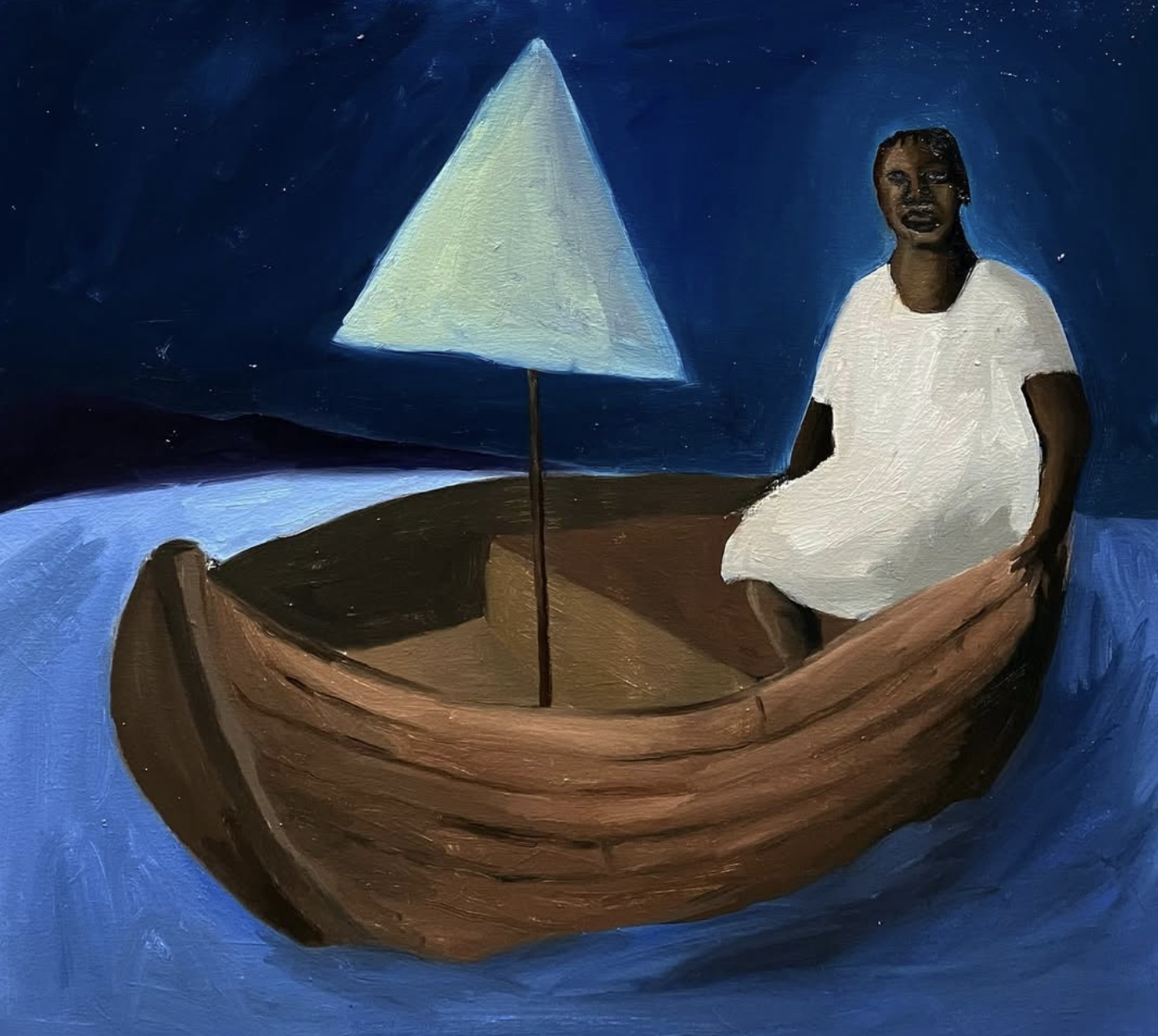
Night Glow, 2024. Teshome Douglas-Campbell. Photo courtesy of Teshome Douglas-Campbell.
What is your favourite medium of art?
Oil paint, even though it's also stressful!!
What is your current favourite colour? Has this always been your favourite colour?
Hmmm, I really love brown, a warm, earthy brown, it’s not always been my favourite, but brown feels right for now.
What was something that scared or intimidated you about a career in the arts when you first started out?
I wouldn't say intimidated, but I think coming from a working-class background, you quickly realise the arts are a space which is incredibly exclusive, even in the way people speak and speak to you. It's easy to be under the illusion that you're out of your depth, or you don't know enough, even when you do!
What is your favourite piece of art that is not your own?
Holy Mountain II by Horace Pippin, hands down.
What is your favourite piece of art that is your own?
Three Dancers
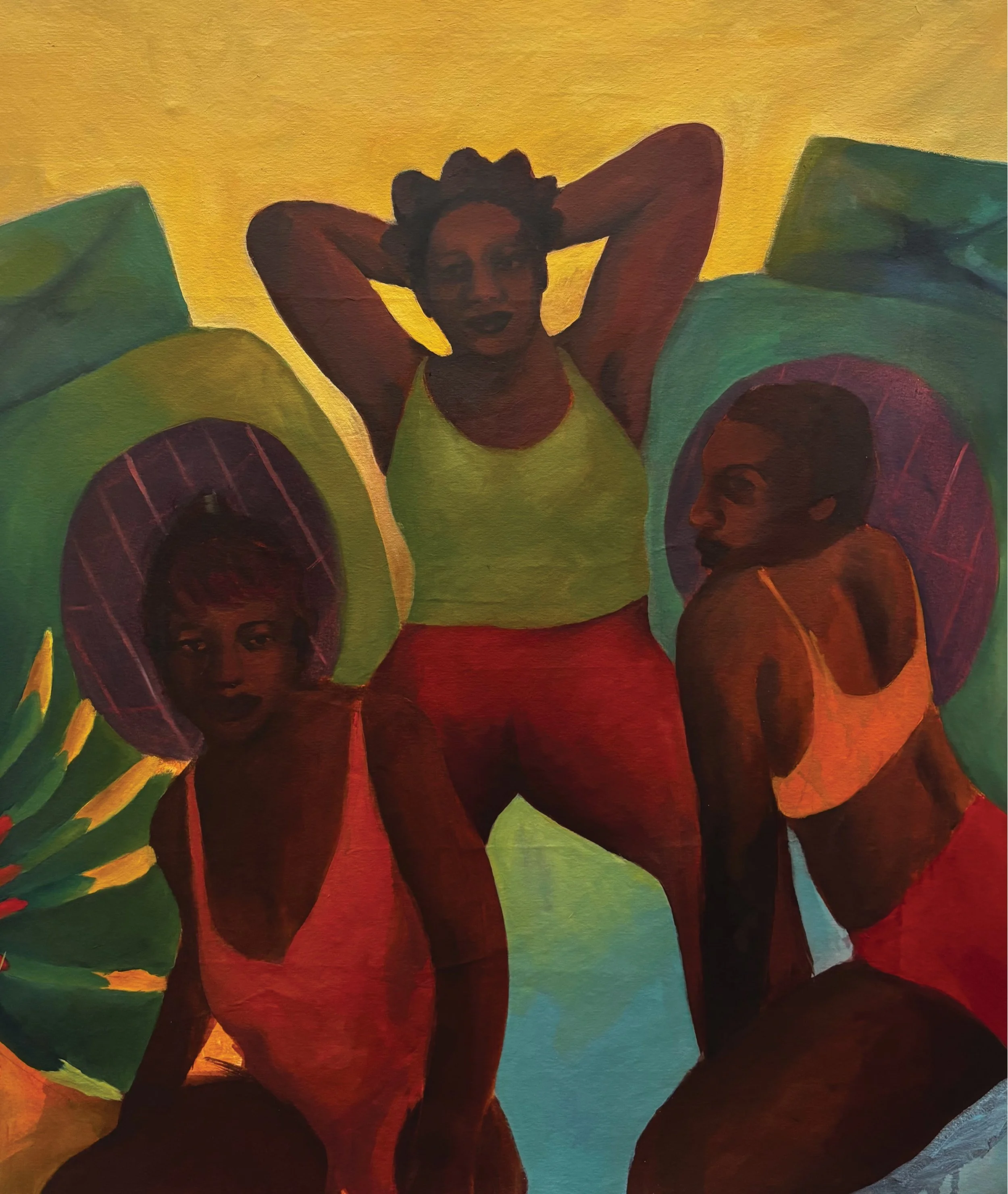
Three Dancers, 2026. Teshome Douglas-Campbell. Photo courtesy of Teshome Douglas-Campbell.
Have you had formal art teaching? If so, what was your experience in formal art teaching?
Yes, before studying architecture, I did an art foundation at the Royal Drawing School and recently went back there to do the Drawing Year.
What do you love most about art?
Art is a humbler and a great equaliser; there’s no ‘right’ answer to what's good or bad. It's a deeply personal thing. And no one else can tell you otherwise!
If you had to have a non-art related job, what would it be?
I feel it would be fun being a purfumer, think I’d be very into that!
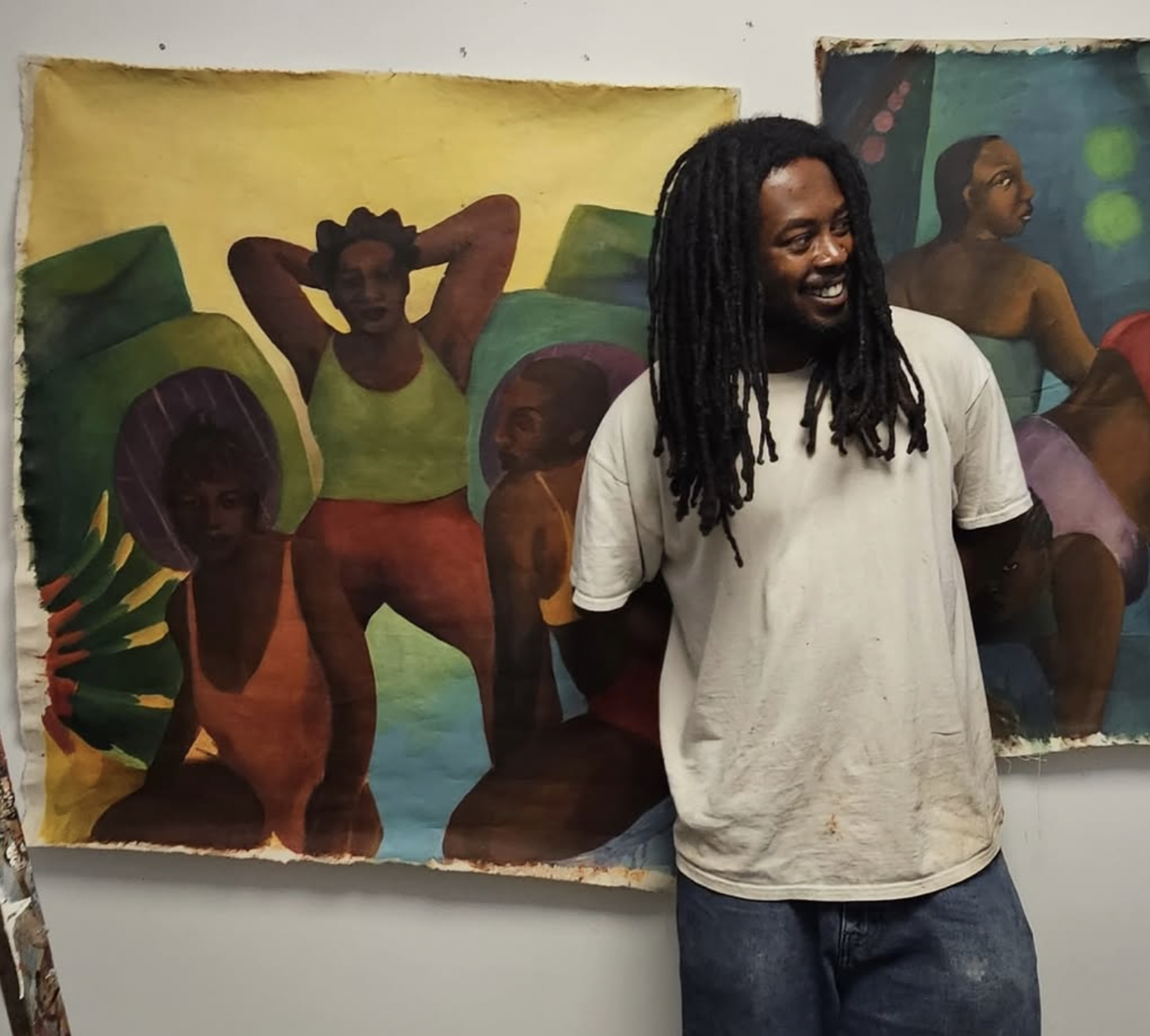
Teshome Douglas-Campbell in front of his work. Photo courtesy of Teshome Douglas-Campbell.
What do you find most upsetting or frustrating about art?
It can be a lot of transaction, which is fine, and its a part of it, but it can get a bit arduous sometimes.
Has a specific family member or friend or person in your life significantly impacted your art career in a positive way? Who? How?
I think my mum has always influenced me and pushed me, she’s a poet and a writer. When I was younger, she would always tell me, “You can always put more meat on the bones.” Often I hear that little refrain ringing in my ears when I paint or write now. Especially when I feel like finishing a piece when I know theres more work to do on it!
What medium of art do you think would be most frustrating for you personally to create in?
Oil paint; there's too much possibility!!
Has an art piece ever made you feel deep, profound, life-altering emotion? If so, what was it?
Maybe everyone and their dog would say this, but it would have to be Rothko, the Rothko Room in the Tate; I just really remember time standing still in there.
You wrote an article in Wallpaper about the V&A East inaugural exhibition titled ‘The Music is Black’, an intimate exploration of Black British music culture. Being the inaugural exhibition is a big deal for an institute as big and as popular as the V&A East. Does ‘The Music is Black’ being its first exhibition have a larger meaning or a larger effect on the way in which England is seeing Black British music and culture?
Yeah, I think it means a lot; it's a material recognition that these histories had a national and international impact, and everyone needs recognition.
Does it affect the way in which England sees Black music and Culture in a larger sense? Maybe not.
But in many ways, I rarely see these large national institutions as being on the forefront of change or leading the conversation within the UK, but they are a mirror and a platform to it. And finally, this national platform includes the story of the struggle for Black people to express themselves freely, carve out a Black British identity and make some truly era-defining music in the process.
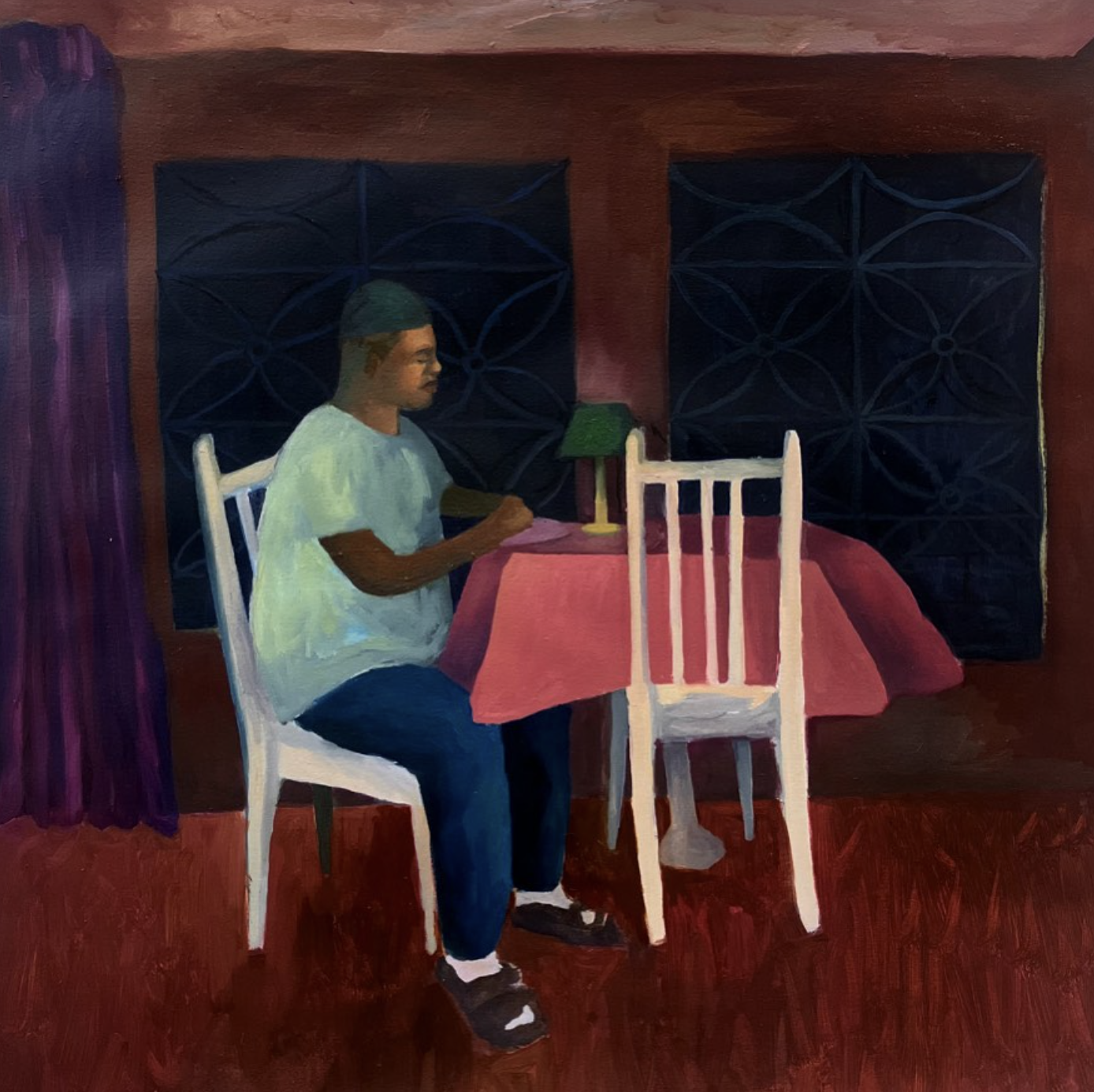
St Jerome of St Lucia, 2025. Teshome Douglas-Campbell. Photo courtesy of Teshome Douglas-Campbell.
What was your initial reaction after seeing the exhibition?
It was nostalgic, and in many ways validating. Often, as a teenager, you don’t realise you're tapped into a music movement which is writing history. It’s hard to feel the gravitas of it all. So while I was looking at the exhibits, it was nice to know I was there, somewhere in the dance, with my likkle gunfingers.
What were some of the pieces that still stand out to you from that exhibition?
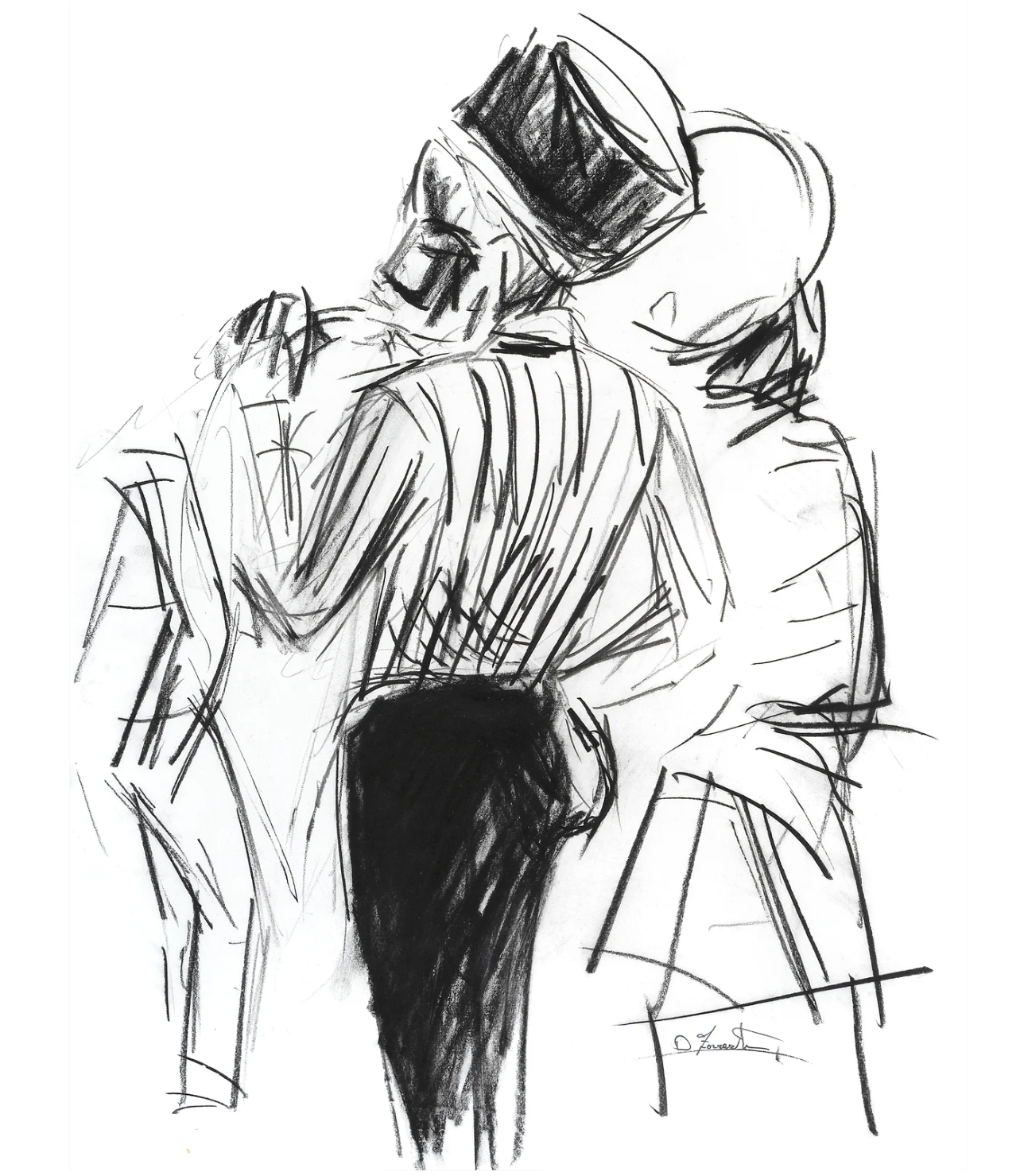
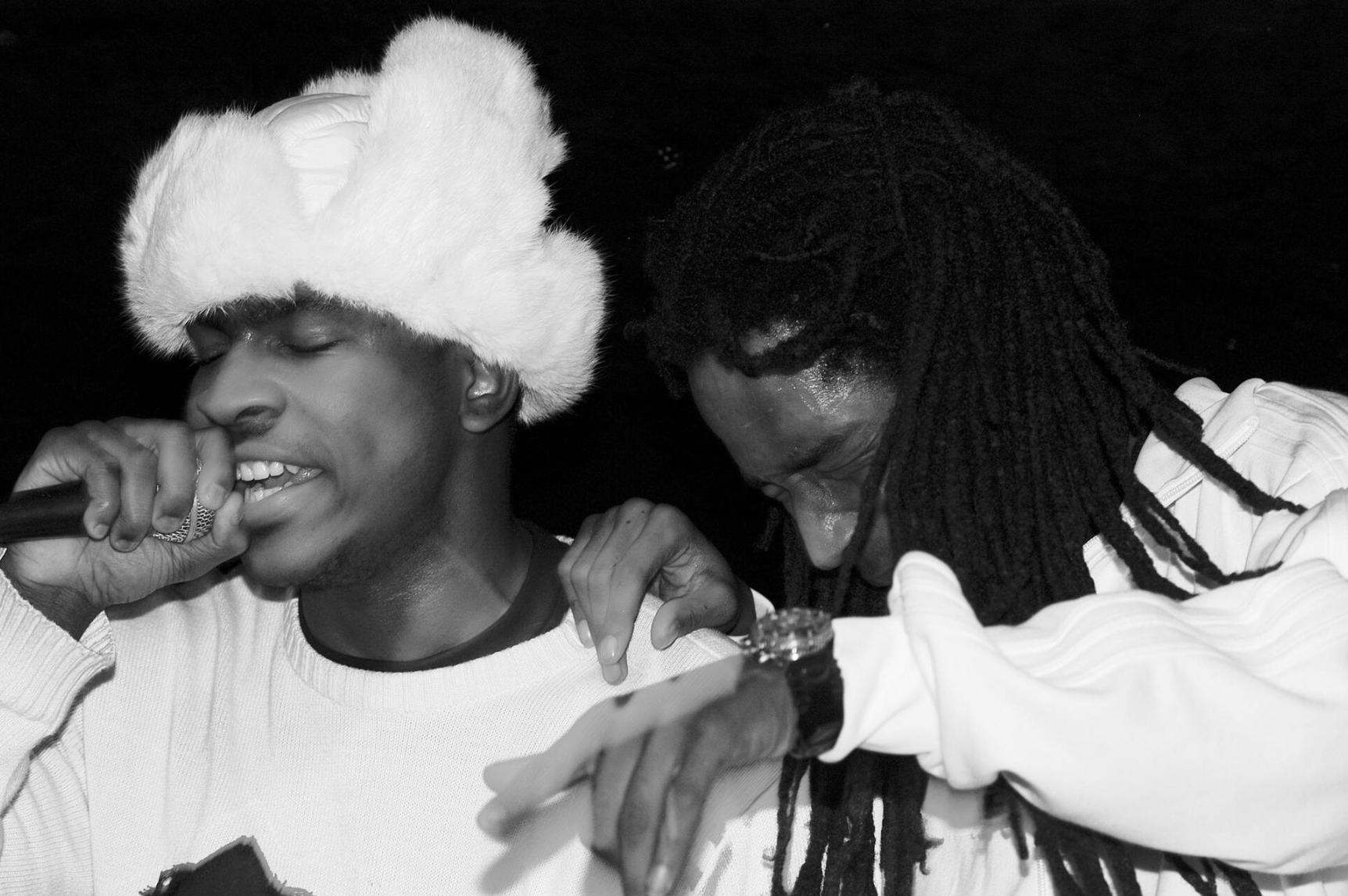
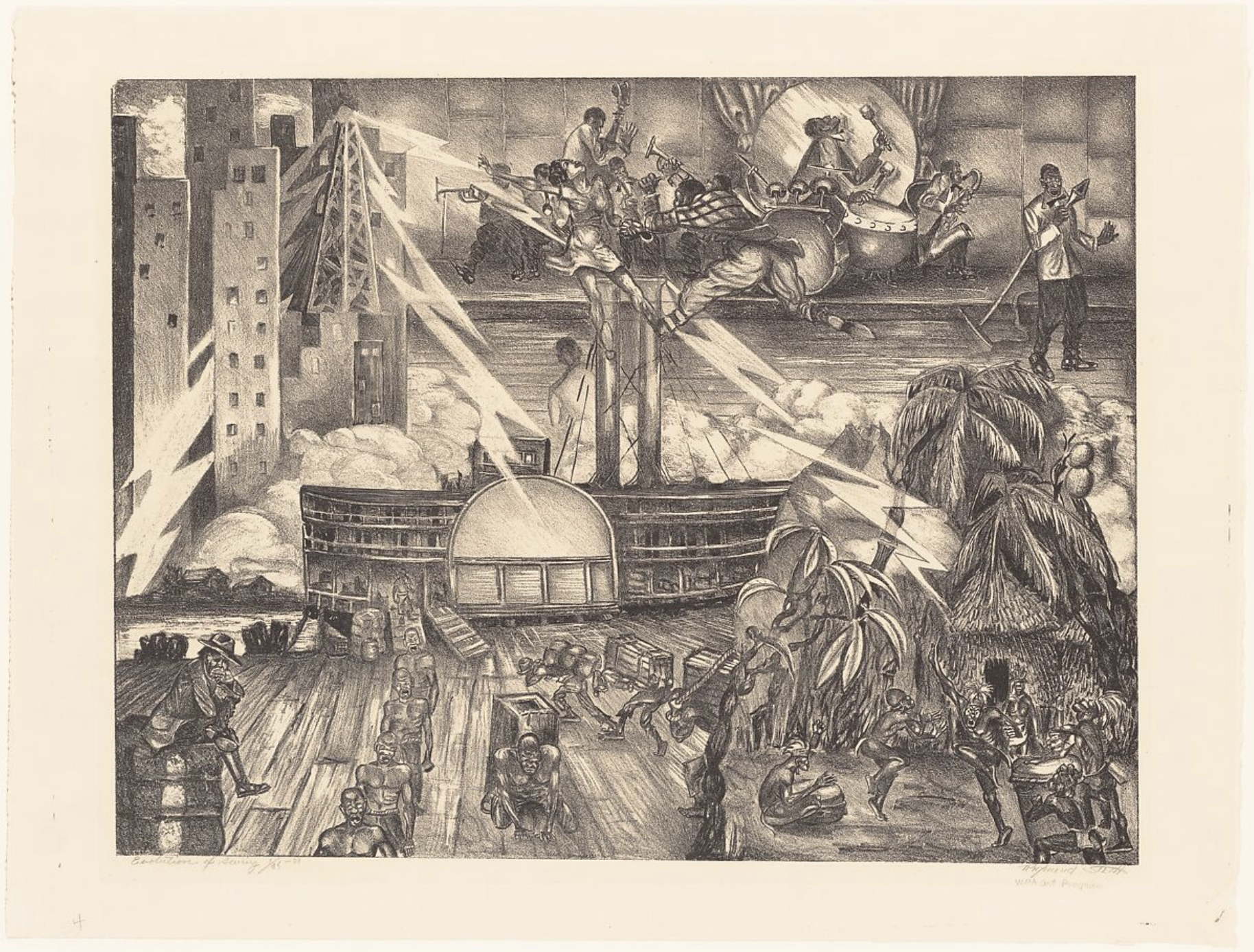
All for different reasons but:
Police in Blues Club by Denzil Forester,
Skepta and Jammer, Run the Road, a photo by Sam White taken at Fabric
The Evolution of Swing, by Raymond Steth
You are a founding member of the PATCH Collective. Can you tell us a bit about its conception and about the collective itself?
Architecture is a very white and very middle-class profession. It’s often discussed in very formal terms and with narratives that often leave out the stories of global majority peoples. As PATCH Collective, we are trying to address the narrative imbalance and look at architecture in the way we, as children of the diaspora, experience the city and make the city. For example, looking at the relationship between architecture and food, architecture and music or architecture and it capacity to cultivate a sense of home. The Collective is about acknowledging and celebrating that these provocations have vastly different implications when we start to look at them with an intersectional lens of our own lived experience as the children of immigrants.
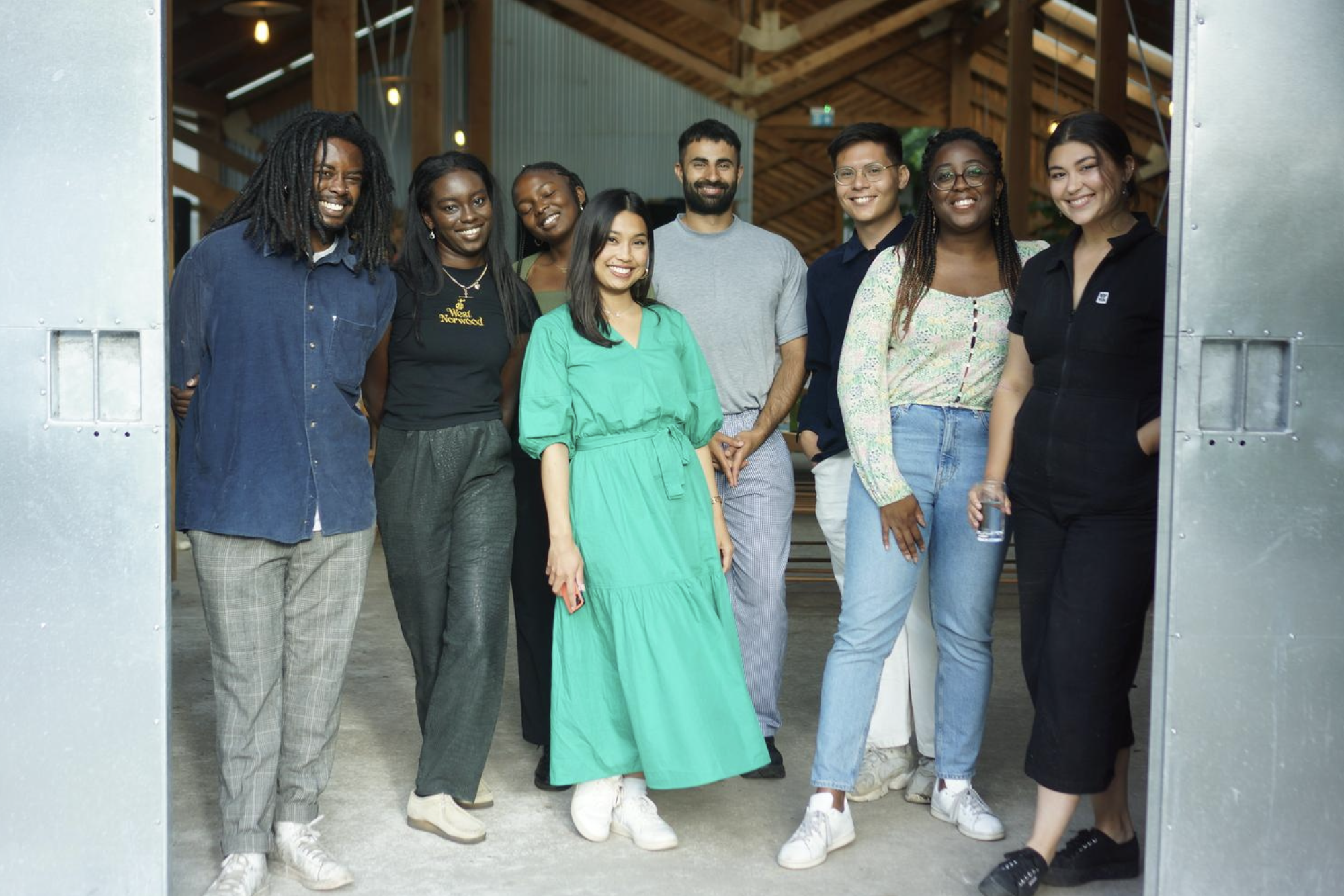
The PATCH Collective. Photo courtesy of Teshome Douglas-Campbell.
What kind of canvas do you paint on usually?
The cheapest! I’m frugal! But also I kinda prefer the texture of the cheaper stuff.
You create in many different ways using various media. Do you think different media bring out different artistic styles from you?
Yeah, it definitely results in different styles but despite that, there is a groundedness and an earthiness to all the work regardless of media which is very much me. I feel there’s also a consistent politics that runs through it all. I make work, write about and am involved in things which I believe in and I believe are important.
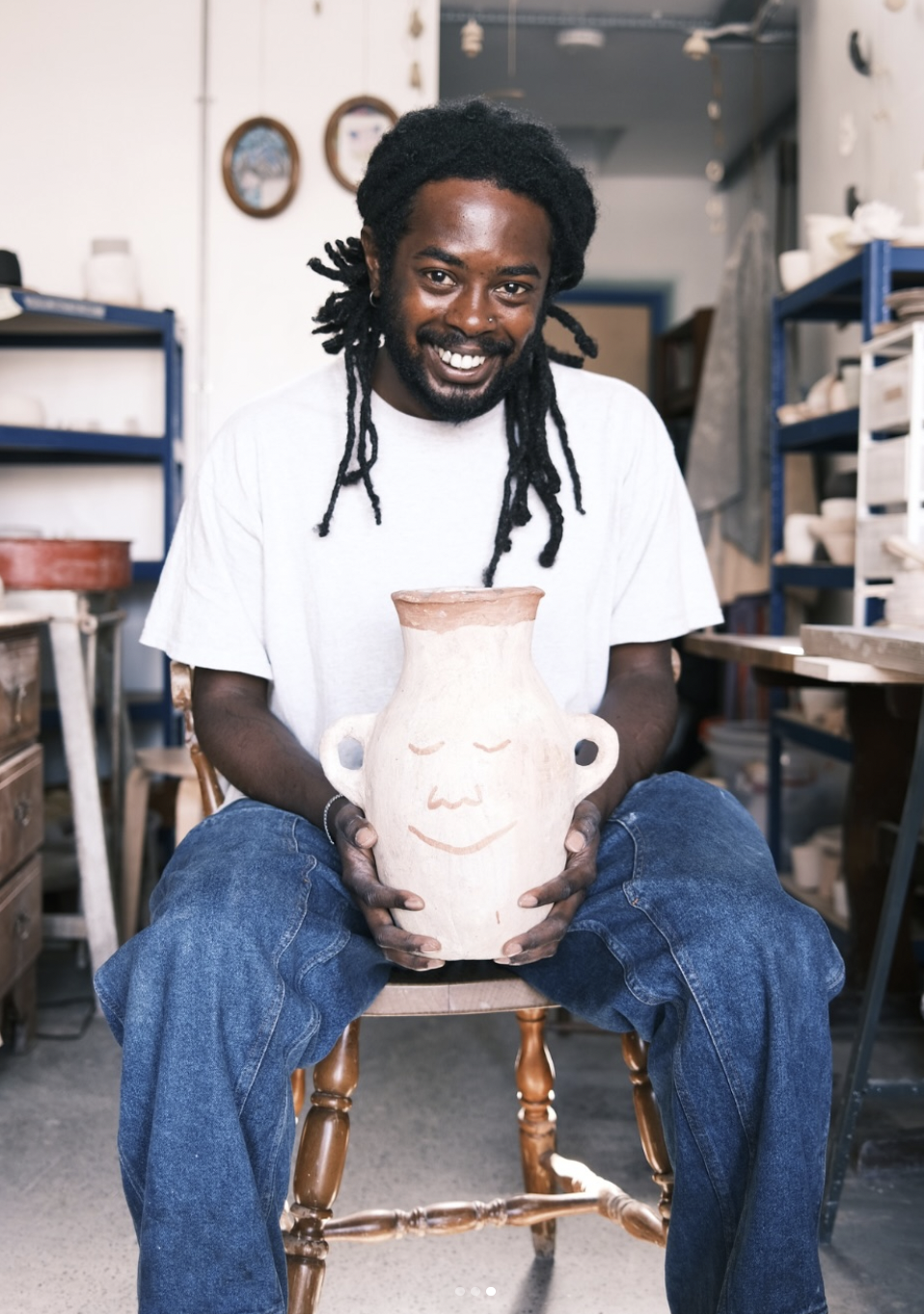
Teshome Douglas-Campbell. Photo courtesy of Teshome Douglas-Campbell.
What other artists influence your work today?
I’ve been really loving the work of:
Matthew Krishanu
Jonathan Lydon Chase
Obi Agwam
Alexandria Couch
What other artistic medium do you think you would find most fun to partake in for a day?
Maybe not fun but one day I would love to try dance, I would be sooo scared but it does seem so liberating.
What is an essential non-art-related item you always have with you when you are making your work?
Airpods, I have to have music always!
Who is another artist that you think is actively making the world a better place, whatever ‘a better place’ means to you?
Maybe not artist but I really love what Resolve Collective are doing in the world, its great to see.
What social, cultural, and/or charitable cause do you care deeply about ?
A lot, but I really care about anti-gentrification, giving reparations to those who have developed and cultivated a rich culture which then gets extracted from. I really want to see those communities meaningfully benefit while also remaining visible and present in the spaces they helped to create.
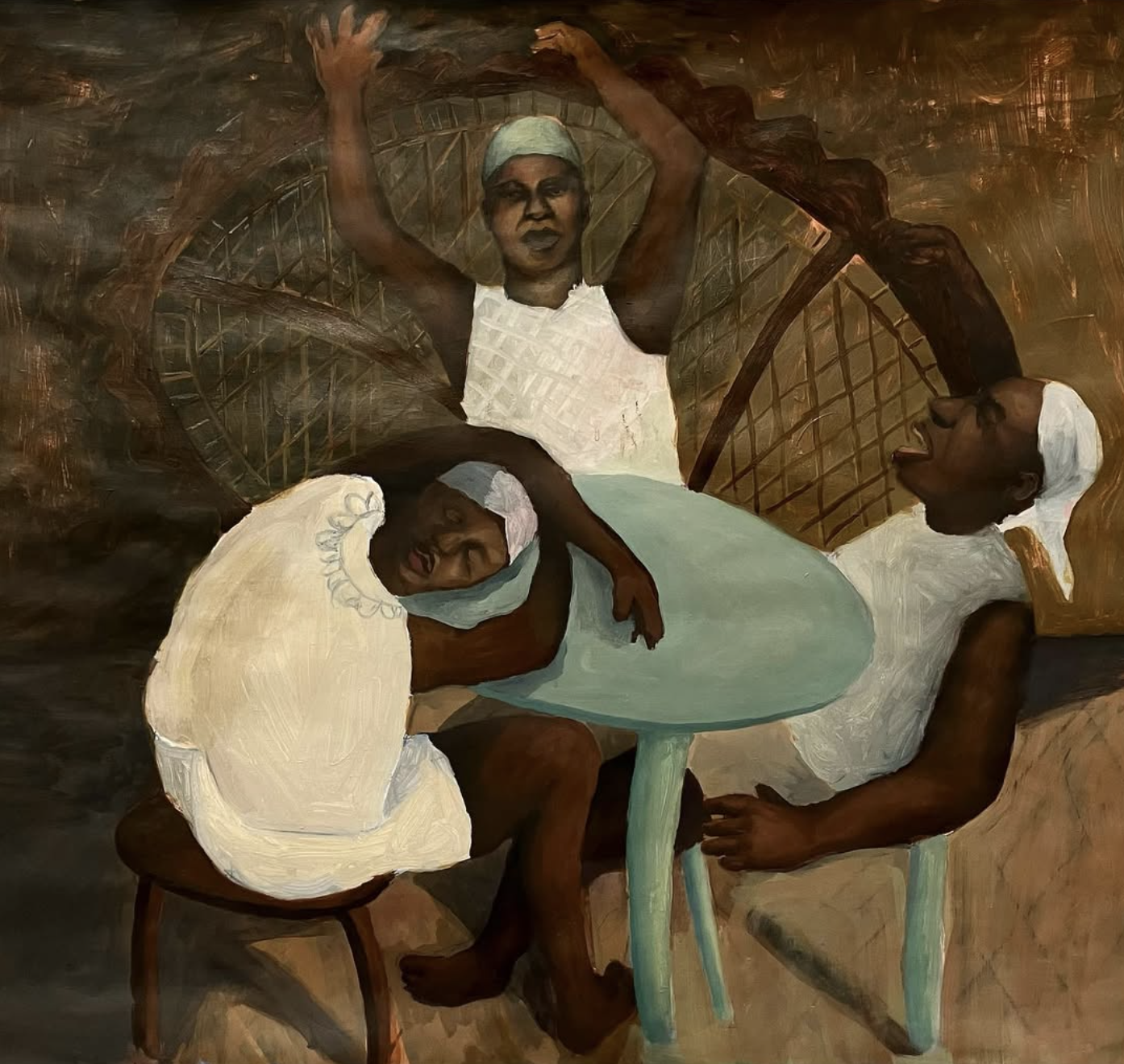
Crying, 2025. Teshome Douglas-Campbell. Photo courtesy of Teshome Douglas-Campbell.
What natural element do you relate to most? Air, fire, earth, or water?
Earth! I’m a Capricorn and very much embody a lot of those traits!!
What is your favourite animal?
Platypus.
What is your biggest dream or goal you want to achieve in your artistic career?
I have no big dream or goal, the work will do what the work will do, and will take me where it takes me! I’m very happy with that to be honest.
What are you currently working on in India?
There are so many parallels between Jamaica and India not least the fact of both being subjugated by the British. Lots of my work here has been really just me being continually fascinated by the motifs, rituals which speak so colourfully and reverently to the spiritual beings. So I have been soaking it all up and painting it all out.
ART ZAZA believes in the power of kindness and community support for those who may need it. Inspired by Douglas-Campbell’s work in uplifting communities and voices who face gentrification and marginalisation, ART ZAZA encourages readers to check out Latin Elephant, a charity and organisation building collective power for Black and minoritised Londoners to challenge gentrification.
Interview by Eliza Palmer
ART ZAZA would like to thank Teshome Douglas-Campbell for his participation. Learn more about Douglas-Campbell on his website, teshomedc.net, and on his Instagram account, @ark_rube.