Further information can be found on Lucy Evans’ Instagram, @lucyevanns, and on her website.
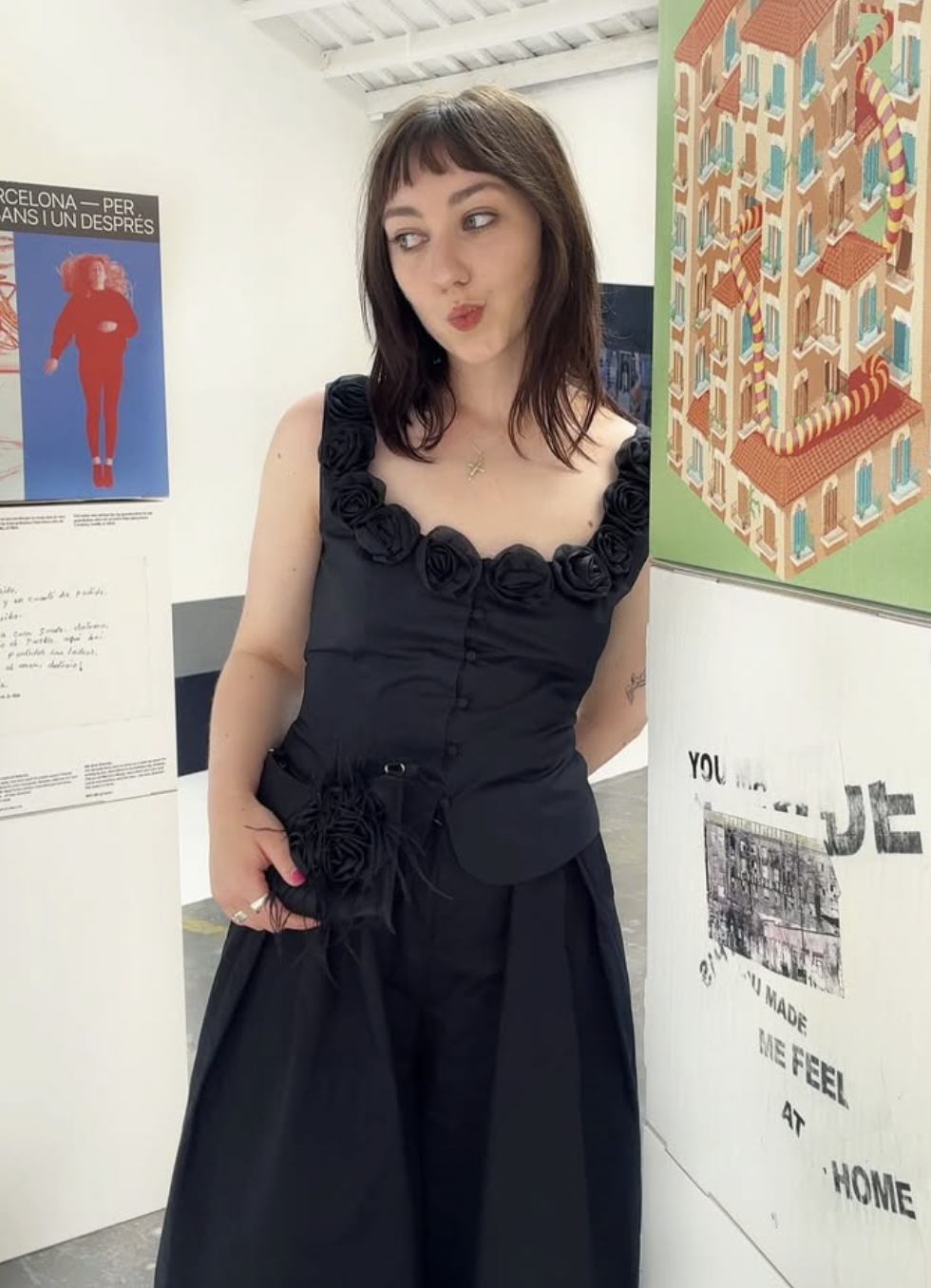
Lucy Evans. Photo courtesy of Evans.
Lucy Evans, a mixed-media artist from Wales, draws on her own life experiences to create her pieces. Art practices like collage and printmaking have helped Evans to discuss what life is like as a neurodivergent woman from a working-class background. She confronts confusing emotions and difficult life moments with acceptance, creating a body of work that portrays her deep interest and appreciation of people: strangers, friends, family, and herself.
What was your first introduction to art?
My grandma had a book of Titian’s work, and I remember always being so curious about it. It was black with gold lettering, and looked so grand and important. I remember her opening it up for me one day, and being absolutely mesmerised by it. It must have been my first real introduction to art of any kind. I remember wishing I could own a book as beautiful and grand as that one, and a couple of years ago, she finally gave it to me. She doesn’t have any particular interest in art herself, but her home is filled with Catholic iconography and Renaissance prints, much of which has had a big impact on me.
What memory from your childhood do you think played a significant role in your development in the arts ?
I was always creative, and I think as an only child who enjoyed my own company, it was always encouraged for me to sit down and make things. I must have been around 8 years old when, one day at school, we learnt about the 1960s. We sat around listening to The Beatles, and it was as if something flipped a switch in my brain. I’d never heard anything like it before! We were shown photos of Twiggy and pop art- I became obsessed. I would sit on the computer in the corner of the classroom printing out photos of all of these 60’s icons. I think that must have had a big impact on me- it was as if there was colour in the world for the first time and I knew from then on that I wanted to be a creative of some kind.
How do you go about beginning the process of creating a work of art? What is the first step?
It usually starts with text. I start by typing out all of my thoughts and feelings without any form or structure, basically just creating walls of text. I then print these out and use them to create eurasia poems, blocking out words to find and create new meanings. Amongst the rambling I tend to notice that I am talking about specific people or situations. This process helps me to make sense of what I’m actually thinking or feeling and I find it very therapeutic. Feelings from years ago resurface and the process of pairing this text with imagery or texture becomes a way of processing complex emotions.
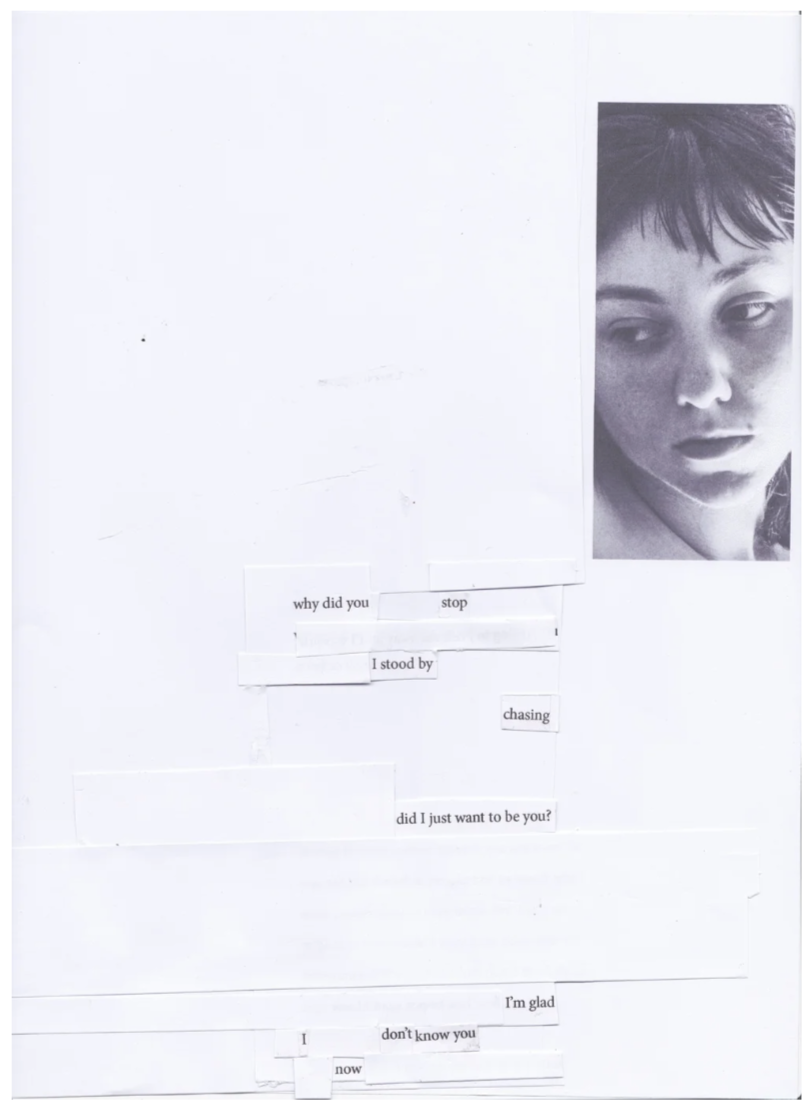
Ruminate, 2026. Evans. Photo courtesy of Evans.
What is your current favourite colour? Has this always been your favourite colour?
Right now I would say green, it probably used to be pink. I still really like pink, and I probably switch between the two. Pink pops up a lot in my work. I can’t say I have ever been super passionate about any one particular colour. I’m not very drawn towards colourful things.
What is your favourite piece of art that is not your own?
Tough question! I’ve had to think a lot about this one and I tried to come up with a clever answer, but I think it genuinely has to be Tracey Emin’s bed. I wish I’d made it first. That bed still infuriates people to this day. It means so many different things to so many people, and I think it represents everything that great art is. On an emotional level, it really speaks to me and my own lived experience. When I first saw a photo of it, it opened me up to a new realm of possibility of what art could be. I saw it for the first time this year at her show at Tate and was completely mesmerised. I spent ages looking at it. I would love to see it again on a quieter day- I visited on a fully sold out day. It was so busy and there were a few pieces in the show that I didn’t get to see properly. I’d love to spend more time with the bed, to see how the feel of it shifts in different contexts. I remember seeing that it was exhibited alongside some of Turner’s paintings a few years ago. I bet that was spectacular.
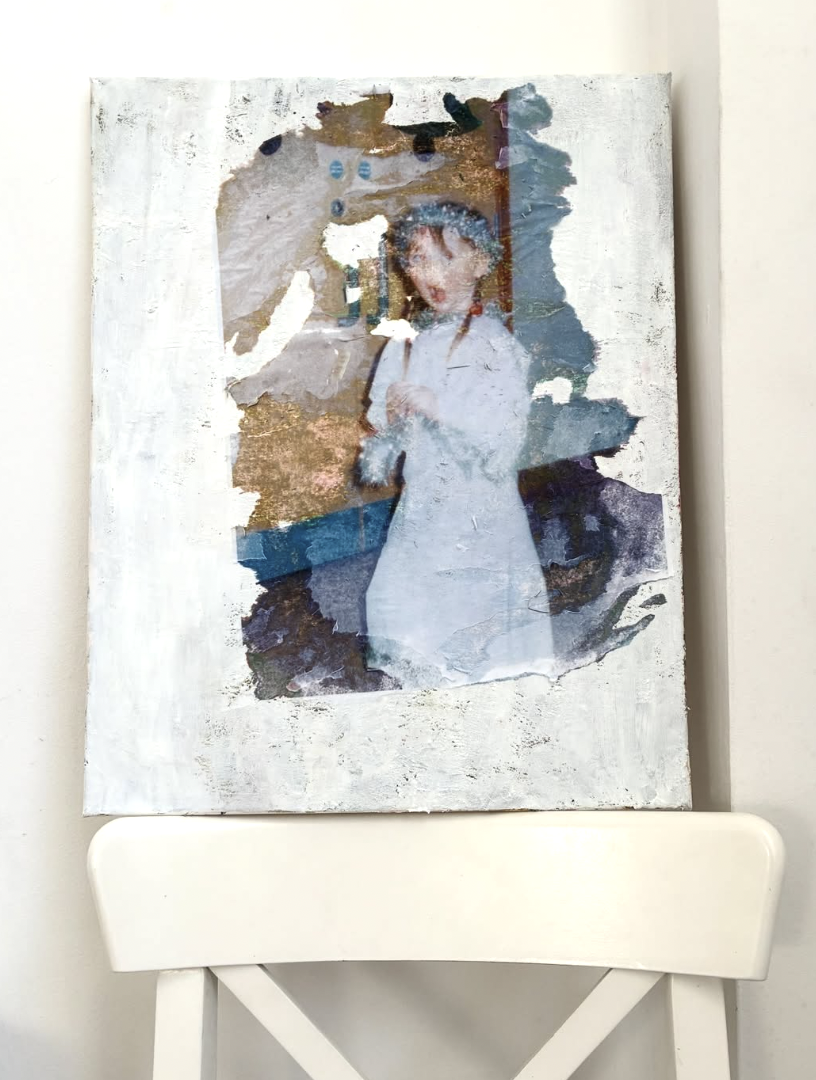
Work in progress, 2026. Evans. Photo courtesy of Evans.
What is your favourite piece of art that IS your own?
‘And Then I Turn and Try Again’, a self portrait monoprint. I feel like that piece changed everything for me- my practice has taken on a very different direction since then. I get a lot of people messaging me about it. It means a lot to me and I’m glad it does to other people too.
You mentioned in your 2021 DAZED Magazine feature, ‘I’ve come to realise just how much I value collaboration and a sense of community when creating work’. How do you go about collaborative projects? How do you find people to collaborate with? What do you look for in a potential collaboration?
My work is a lot less collaborative these days, now that I have moved away from fashion.
It’s something I’m definitely open to again, but I’m really enjoying my current way of working. In fashion you’re often working with a team, whether it's a model, stylist, designer… I quite like being a one woman show and doing everything in my own time.
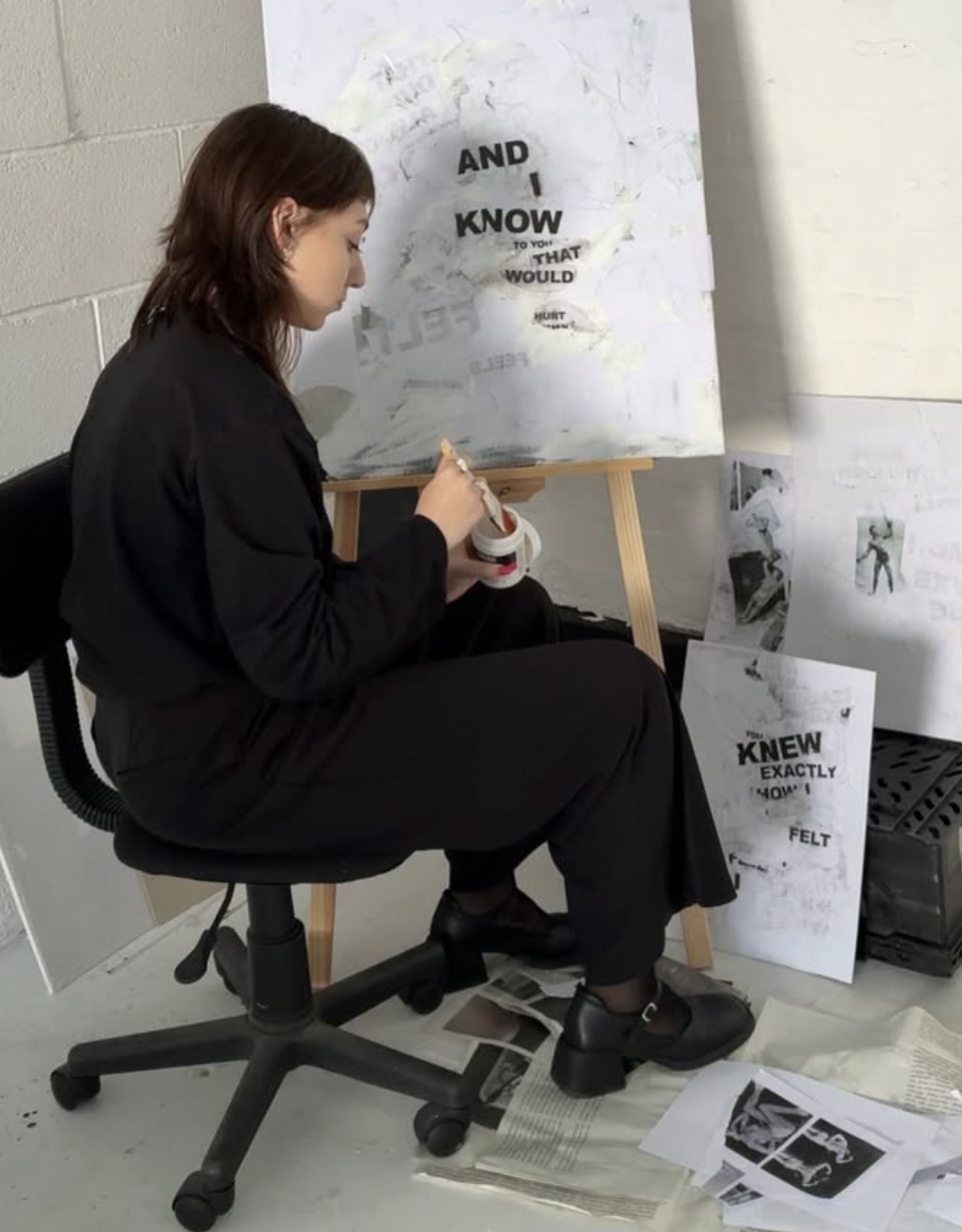
Evans’ studio, 2025. Photo courtesy of Evans.
You also said how you initially wanted to be a fashion designer. What style do you feel you would have leant towards if you were to have continued working in fashion?
Very playful, diy and surreal. Think: Harry Freegard, PzWorld, Matty Bovan, Collina Strada, Rory Mullen…
What designers do you really like right now?
Joe Fearon, Michaela Stark, Francesca Lake, Anna Dewhirst
Has an art piece ever made you feel deep, profound, life-altering emotion? If so, what was it?
Going back to Tracey Emin’s ‘ A Second Life exhibition’, when I stood staring at the bed, I turned to my left and there was a painting on the wall. That painting was 'I never Asked to Fall in Love - You made me Feel like This' (2018). I’ve never experienced anything like it and I’m not even sure how to put it into words. It was as if it was moving, pulsating. I turned red hot. It was like being in trance and I couldn’t look away. I’m not sure what it meant but it had a really big impact on me. I was probably just dehydrated and overstimulated but I’d like to think that there was something spiritually significant about it…
Do you take personalised commissions? If so, how do you go about applying a customer’s requests to your art? If not, why don’t you?
I work with brands, magazines etc but not necessarily on personalised commissions- I’m just not sure how it would work given that the work is so personal and deeply rooted in my own experiences. If a request came my way that was a good fit I’d definitely be interested…
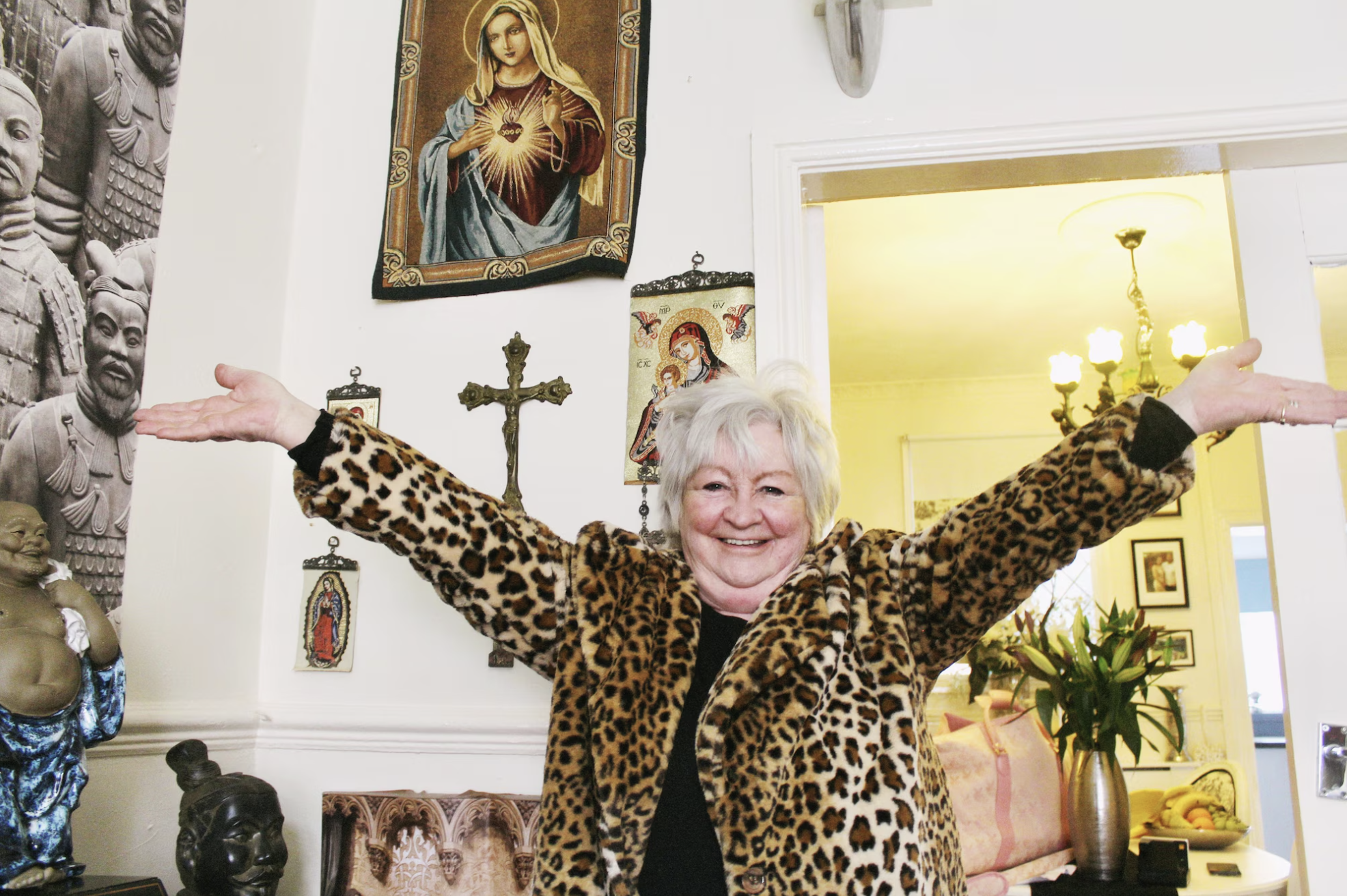
Evans’ grandmother, 2021. Evans. Photo courtesy of Evans.
Has a specific family member, friend, or person in your life significantly impacted your art career in a positive way? Who? How? In your DAZED feature, you spoke about your grandmother Sandra. Is she still your main sort of inspiration or supporter?
Pretty much everyone in my life, past and present, good or bad, has had a big impact on my work. So much of what I make is based on conversations and interactions I’ve had, or wish I could have. Even the terrible experiences I’ve had with people have, I guess, managed to positively impact my work - they’ve given me something to talk about!
My grandma is definitely still a big inspiration. I’m very fortunate that my family has always backed me all the way with art despite them having no interest in it! The other person who comes to mind is my lecturer from my BA, Dan Szor. He opened up a whole new world to me, both visually and creatively. He always encouraged me to make things weirder and funnier, and to trust in my bad taste. He encouraged me to use texture in my work and make my images look dirty, which completely revolutionised the way I work. I don’t know what on earth I was doing before then! He is a great artist and a great teacher.
What other artistic practice would you like to try that you don’t currently do?
I’d love to experiment with making films. It’s something I played around with when I was studying fashion, but I would like to integrate it into my practice to explore autistic scripting and rumination. I saw a great film from Babeworld at Site gallery in Sheffield recently, it left me feeling very inspired.
What are some things you like to do outside of your current work?
I love music and I go to a lot of gigs. I saw Nina Winder-Lind recently, who was absolutely brilliant. I’ve been making an effort to get into film this year. I watched Solo Sunny recently which was great. I’m working on improving my attention span!
What is something about collage that you like most?
I love how fast and immediate it is, but also it leaves a lot of room to move things around. I don’t glue things down immediately, I usually scan collages in before gluing so I have a record of the composition, then continue moving things around. It’s not a very sensible system, but it works. I’ve been experimenting more with painting and using texture paste etc recently but I’m so impatient and hate waiting around for things to dry between layers. When I make collages I work really really fast, often making lots of pieces all at the same time. A painting can take me months to finish.
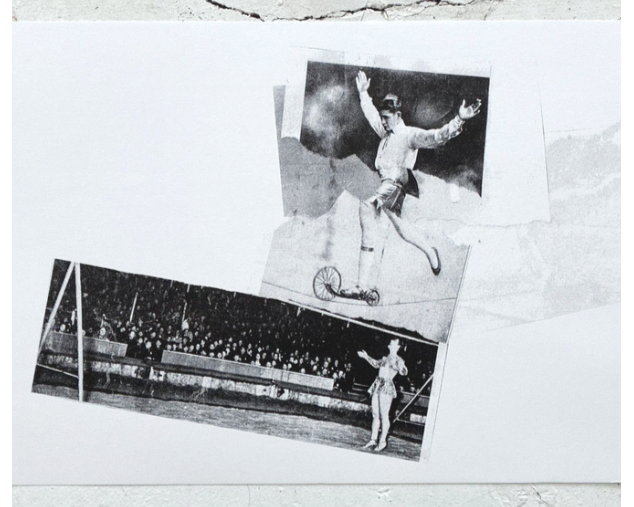
A Show Of Oneself, 2025. Evans. Photo courtesy of Evans.
How long would you say it takes for an initial idea in your head to become a piece of art? How long does it take for the idea to make itself a reality, if that makes sense?
It totally depends on the complexity of the work and how I’m feeling at the time! When I have a very specific image in mind it tends to be quite quick. I’m quite all or nothing with these things. Either I throw everything at it there and then, or I put something down and don't touch it again for months. I have a rule with myself when it comes to collages. I have to finish them in one sitting, otherwise I leave all the loose pieces lying around for months and end up losing them.
Which other specific artist would you like to watch work for a day?
Sadie Whelan. I would love to see where she sources her materials and how she creates texture in her work.
Do you listen to music or the radio when you work?
I usually sit in silence when I work. Occasionally when I’m painting and trying to get into a certain mindset or mood, there are a select few songs or albums I will listen to.
My go to’s are:
Charlotte Gainsbourg IRM
Pj Harvey Let England Shake
Aldous Harding Train On The Island
Portishead Dummy
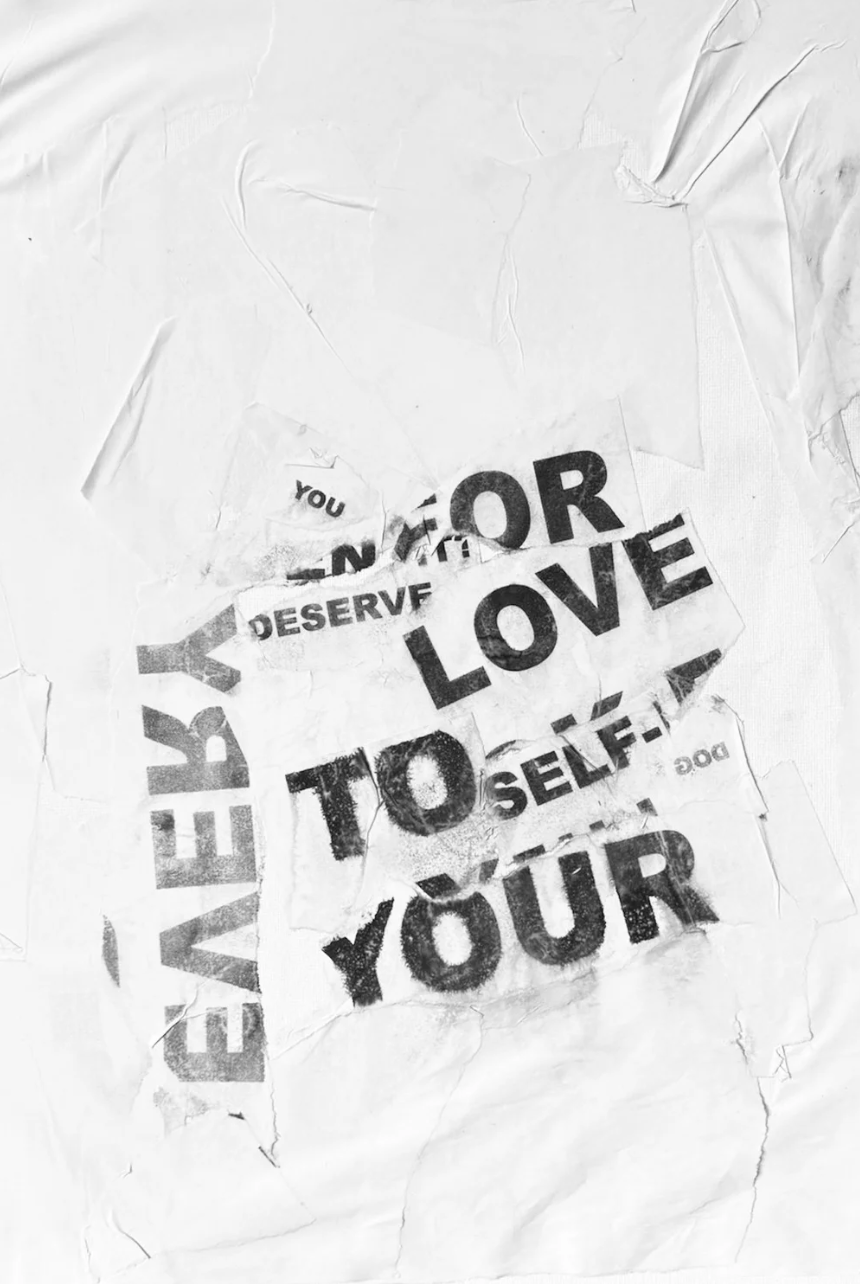
Part of ‘Deserve Love To Your Self’ project, 2024. Evans. Photo courtesy of Evans.
Your online portfolio includes your 2024 series titled, ‘Deserve Love to Your Self’, and it featured collages on board and investigated latrinalia and the collective need for belongingness. Can you tell me where the inspiration for this series came from, and how you went about making this series?
I was researching themes of shame and gender at the time for my MA, and became interested in latrinalia (graffiti in public restrooms) and what compels people to write in these spaces. At first glance, a lot of it seems nonsensical, but when you look a little deeper, you begin to realise that people are often searching for some kind of connection. I was curious about what makes someone want to leave their thoughts behind in a space that is both public and private. It's somewhere people can be open and vulnerable, perhaps because there's a sense of anonymity and very little consequence.
I noticed that the women's toilets were often filled with messages that were uplifting, supportive and centred around self-love. I asked some friends about the men's toilets, and they suggested the messaging there was very different. I became interested in whether these differences reflected something about how we perform gender, and particularly how masculinity is expressed in spaces where men are largely communicating with one another.
As an experiment, I contacted a number of bars around Manchester and, with their permission, placed posters in the toilets with prompts such as 'When do you feel most loved?', with a pen attached so people could leave their responses. The differences were quite striking. The responses collected from the men's toilets were consistently around 99% hypersexual, violent and aggressive in their language. I found this really interesting, particularly in contrast to the more affectionate and supportive messages found in the women's toilets. It made me think about the different ways men and women navigate vulnerability, intimacy and the expression of emotion, and how ideas of masculinity might influence what we feel comfortable expressing, even anonymously.
'Deserve Love To Yourself' is an erasure poem. I took photographs of toilet stalls in various cities and transcribed what people had written, using these to identify recurring themes and patterns. A lot of the messages in the women's toilets were about practising self-love, and this piece was a response to that.
I also saw that you had a series in 2025 titled ‘And Then I Try Again’ which explored the lived experience of Autism and PMDD and navigating burnout, illness, and lack of routine, followed by the 2026 series, ‘And Then I Turn And Try Again’ in which you continued the exploration of autistic burnout, shame, and rest. Can you explain a bit about the thought process behind how you came up with the idea for these series, and how they relate and connect to each other, if indeed they do connect?
At the time I was feeling disheartened with photography and was very burnt out having just finished my MA. I still wanted to create so I decided to take up monoprinting, something I hadn’t done for quite some time prior to that. I had been looking at Sophie Calle’s The Sleepers (1979) and Tracey Emin's Insomnia Installation (2019). I felt like I needed to take my practice in a new direction and instead of observing other people’s behaviours, I wanted to document my own. The result was my most personal work yet, a self portrait series documenting burnout and rumination. I have been making these prints ever since.
What animal do you think you would be?
Others have told me a deer. I did one of those online tests once and apparently I would be a hare. That one rings true to me.
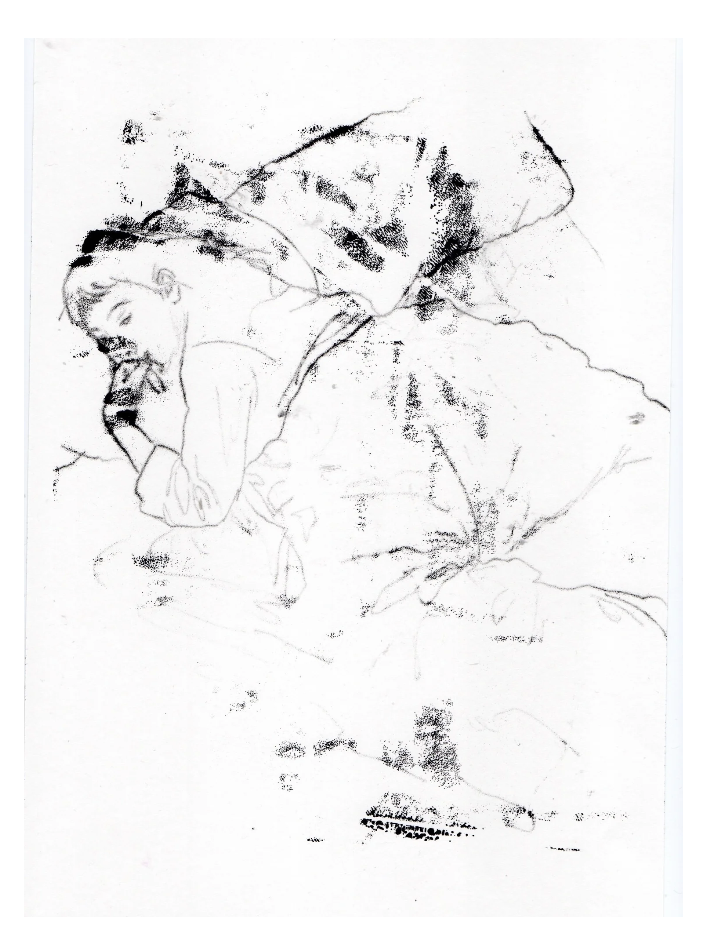
And then I try again, 2025. Evans. Photo courtesy of Evans.
What natural element do you relate to most? Air, fire, earth, water?
Water! I’m a pisces so it’s probably something to do with that. I can’t swim and I’m quite scared of the sea, but I find looking at water really soothing. I often walk down to the docks and stare out at the water. Learning how to swim would probably do wonders for me- something to think about.
What is one piece of artistic advice you want to share?
Make art for you and not for everyone else. Question why you’re making it, if no one else was ever going to see it, would you still be making it?
What is one piece of life advice you want to share ?
It’s only embarrassing if you decide that it’s embarrassing
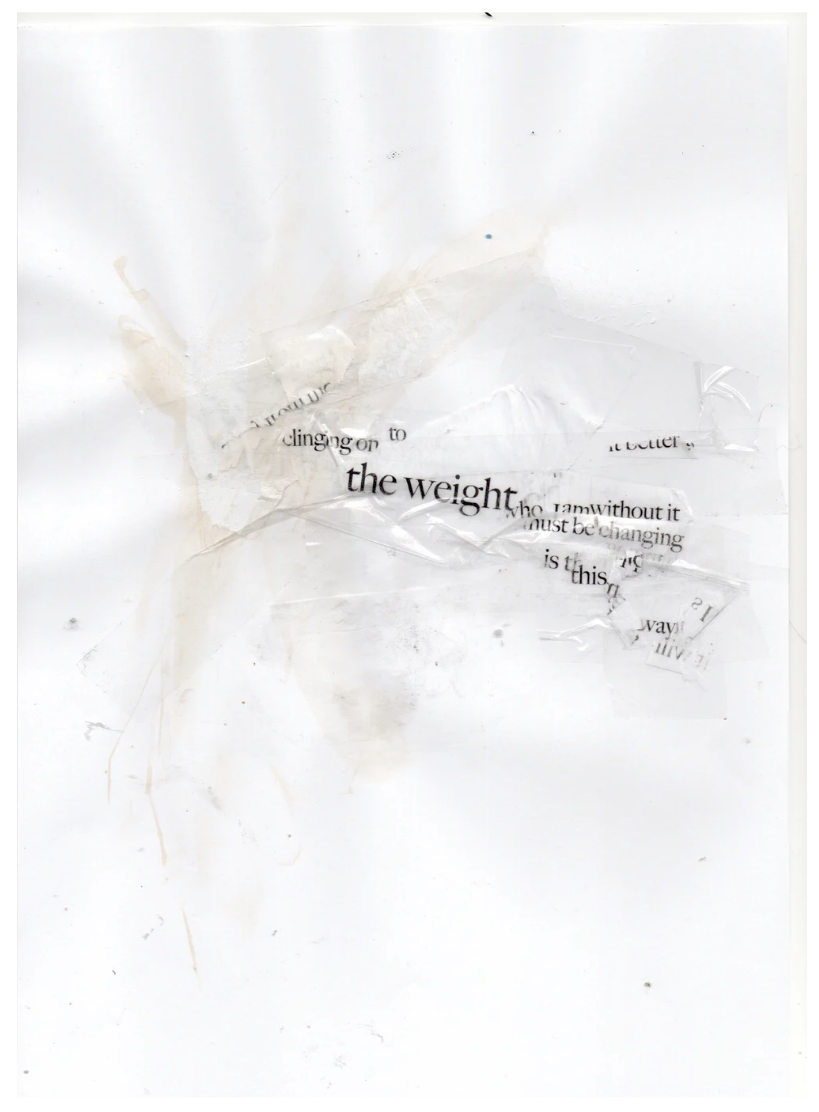
Part of ‘Deserve Love To Your Self’ project, 2024. Evans. Photo courtesy of Evans.
What is something you have learned about others from sharing your art?
It’s become quite clear to me that a lot of young neurodivergent people are in need of representation. A lot of people feel isolated and unsupported.
Where would be a dream place to show your work one day?
At the moment, Mostyn Gallery in North Wales. I did work experience there and I think it would feel like a real full circle moment for me. To have a solo exhibition in Wales would be a dream.
What do you love most about art?
That there’s no right or wrong. As someone who likes structure and routine- it’s so freeing to have this one thing where I can just let loose.
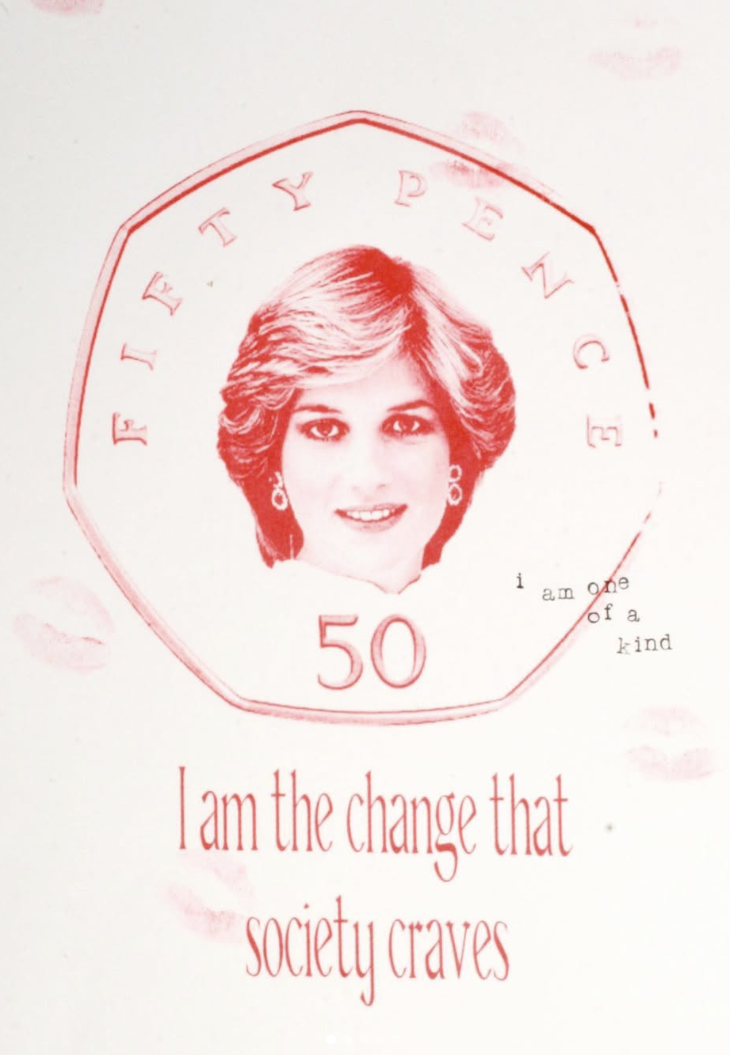
Diana screenprints, 2023. Evans. Photo courtesy of Evans.
Why do you think art is important ?
It allows people to see and experience the world differently, and the act of creating something has that same transformative effect. Making things is such an important emotional outlet; it gives you a way to express yourself, connect with your feelings and, ultimately, feel more alive. Everyone should be encouraged to create something.
What social, cultural, and/or charitable cause do you care deeply about ?
Improving support for young autistic people is something I feel incredibly passionate about. I wasn’t diagnosed until I was 24, and my adolescence was extremely difficult as a result. It breaks my heart to think about how many other young people are out there struggling, without understanding why they feel the way they do or knowing where to turn for support.
There is still so much work to be done when it comes to autism awareness. Too many young people are not taken seriously, and misinformation continues to create barriers to accessing the right support. I would love to see more young people receiving the support and accommodations they need throughout their time in education. Being a teenager is challenging enough without having to navigate the world with undiagnosed autism and battling the exhaustion and overwhelm of autistic burnout. No young person should have to struggle through those years feeling unsupported and alone.
How can we make the art world better ?
More support for young working class artists. Being an artist without any financial stability or backing is really really tough- same goes for music. I’m not sure what the answer is exactly. I think The Basic Income for the Arts scheme in Ireland is a brilliant idea and I’m very intrigued to see how that pans out.
ART ZAZA believes in the power of kindness and community support for those who may need it. Inspired by Evans’ message, ART ZAZA encourages readers to check out charities and organisations helping people with autism across the UK, like the National Autistic Society and Autistica.
Interview by Eliza Palmer
ART ZAZA would like to thank Lucy Evans for her participation. Learn more about Evans on her Instagram: @lucyevanns and on her website.